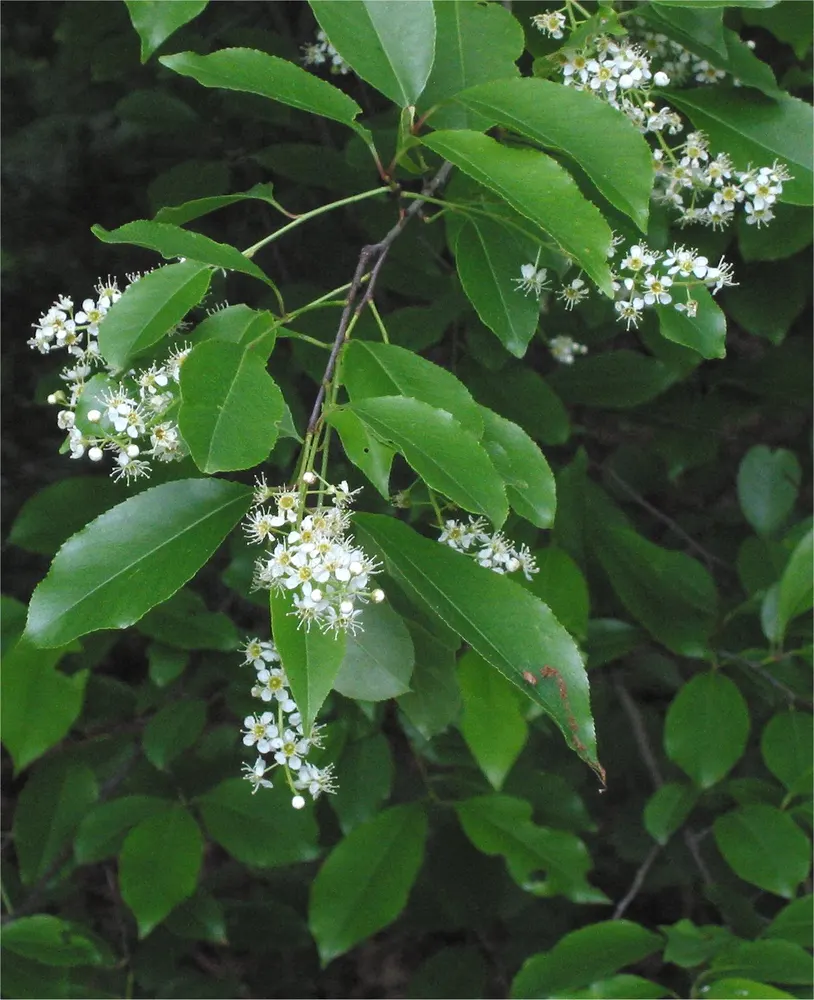
Photo: CC BY-SA 3.0 (via Wikimedia Commons)
Wild Black Cherry
Prunus serotina
Also known as Black Cherry, Wild Cherry, Rum Cherry, Mountain Black Cherry
Key benefits
✦Traditional uses
✦For generations, the inner bark of the wild black cherry was scraped, dried, and aged by Cherokee, Iroquois, and other Native American healers, then passed along to European settlers as a remedy for coughs and colds. It became so trusted a household standby that it was listed in the official United States Pharmacopoeia for decades, and its flavor still lingers in cherry cough drops and cough syrups sold today. The ripe, pitted fruit itself has a long separate history as food, cooked into jellies, pies, and homemade wine across the Appalachian foothills and beyond. This is a tree of real duality: a cherished kitchen fruit growing on the same trunk as a bark that, if mishandled, turns dangerous.
How to grow & use it
✦The full apothecary for Wild Black Cherry
Traditional remedies and step-by-step preparations, a complete growing guide, and how to harvest, dry, and store it, all unlocked with HerbLens Unlimited.
- ✦Remedies & preparations
- ✦ Growing guide
- ✦Harvest & storage
From under $6 a month. Free plant identifications always included.
- ✦Mullein
- ✦Elderberry
- ✦Licorice root
- ✦Elecampane
- ✦Horehound
“For the cough that lingers past its welcome, and calls for an old apothecary standby.”
Scratch the bark of a wild black cherry and it releases a distinct bitter-almond smell, the same telltale scent given off by the cyanogenic compounds that make its wilted leaves so dangerous to grazing livestock.
The leaves, twigs, seeds, and wilted or fresh bark contain cyanide-forming compounds and are toxic, sometimes fatally so to grazing livestock; only ripe, pitted fruit flesh and properly dried, aged bark are safe. Never forage or prepare this plant without expert identification and processing knowledge.