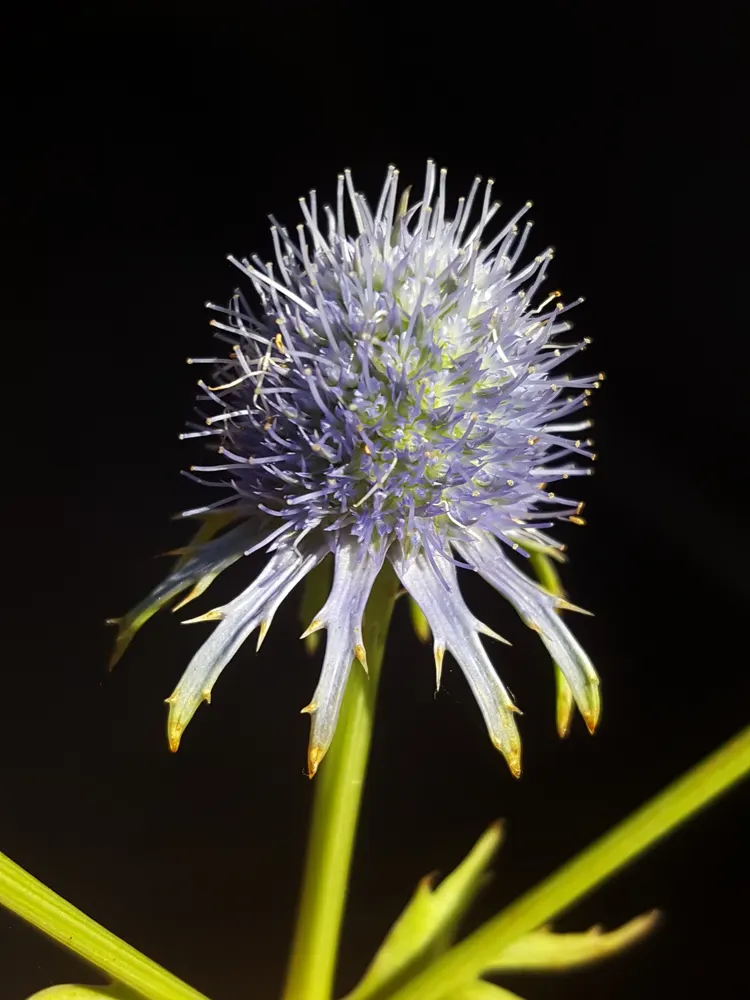
Photo: Alex Abair, CC BY 4.0 (via Wikimedia Commons)
Marsh Eryngo
Eryngium aquaticum
Also known as Marsh Eryngo, Corn Snakeroot, Eastern Marsh Rattlesnake Master, Bitter Snakeroot
Key benefits
✦Traditional uses
✦Marsh eryngo grew up quietly in the wet, overlooked corners of the southeastern coastal plain, and Native American communities in those regions came to know its root well, steeping it as a diuretic and turning to it for kidney complaints and troublesome urinary flow. It traveled in the same family of remedies as its better known cousin, Eryngium yuccifolium, or rattlesnake master, and the two plants share both a look and a reputation, each carrying old stories of being chewed or applied at the site of a snakebite by people who trusted the land's own defenses. Southern folk herbalists later folded marsh eryngo into home remedies for stubborn coughs and colds, valuing the root as a gentle, warming addition to a winter tea cabinet. Its spiny, sea-holly blossoms made it just as welcome in the dooryard garden as in the medicine basket, admired for the cool blue haze it throws over a summer meadow.
How to grow & use it
✦The full apothecary for Marsh Eryngo
Traditional remedies and step-by-step preparations, a complete growing guide, and how to harvest, dry, and store it, all unlocked with HerbLens Unlimited.
- ✦Remedies & preparations
- ✦ Growing guide
- ✦Harvest & storage
From under $6 a month. Free plant identifications always included.
- ✦Marshmallow root
- ✦Dandelion leaf
- ✦Cleavers
- ✦Eryngium yuccifolium (rattlesnake master)
- ✦Dandelion root
“For the damp, overlooked corner of the garden that needs a little blue-flowered magic, and a root with a quiet, old story to tell.”
Marsh eryngo's spiky, silver-blue flower heads are so architecturally striking that the plant is sometimes grown purely as an ornamental, even by gardeners who never learn its long history as a wetland healing root.
Marsh eryngo grows in the same wet habitats as poison hemlock and water hemlock, two deadly carrot-family look-alikes, so never harvest it from the wild without expert identification. It has traditionally been avoided in pregnancy and by those with kidney disease.