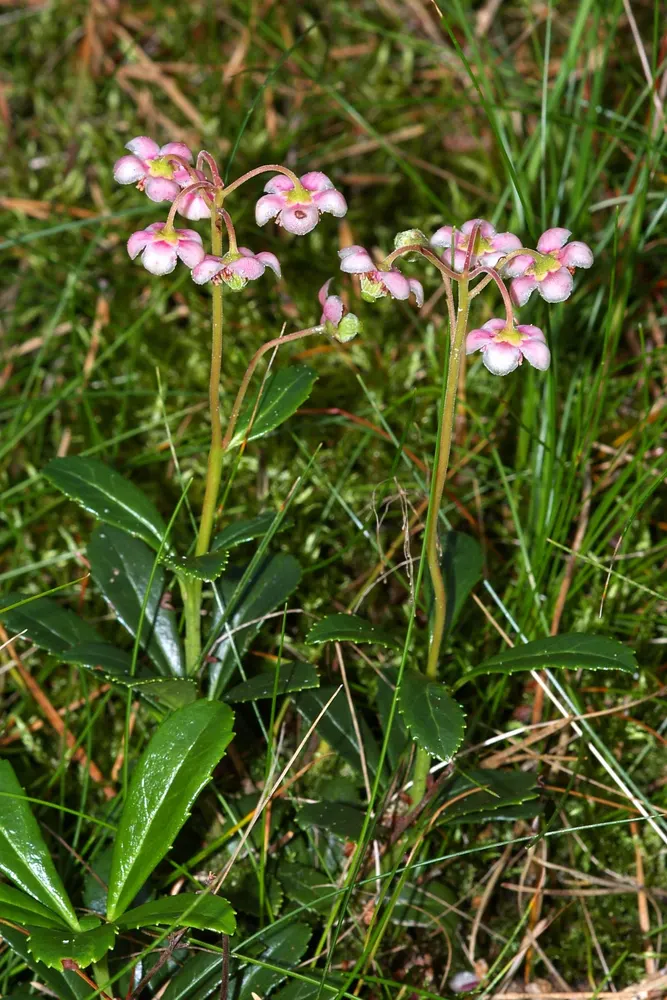
Photo: Christian Fischer, CC BY-SA 3.0 (via Wikimedia Commons)
Pipsissewa
Chimaphila umbellata
Also known as Prince's Pine, Ground Holly, King's Cure, Rheumatism Weed
Key benefits
✦Traditional uses
✦Pipsissewa grew low and quiet beneath the pines, and for generations of Native peoples across North America, including the Cree, Potawatomi, and Iroquois, it was a trusted remedy for the kidneys and bladder. It was traditionally taken as a diuretic tea to ease water retention and support urinary comfort, and applied externally as a poultice for blisters, sores, and swollen joints. Early American settlers adopted it too, brewing it into tonics for rheumatism and even flavoring old-fashioned root beer with its resinous, wintergreen-like leaves. Its very name, borrowed from the Cree, speaks to the hope people once placed in it for breaking up trouble within the body.
How to grow & use it
✦The full apothecary for Pipsissewa
Traditional remedies and step-by-step preparations, a complete growing guide, and how to harvest, dry, and store it, all unlocked with HerbLens Unlimited.
- ✦Remedies & preparations
- ✦ Growing guide
- ✦Harvest & storage
From under $6 a month. Free plant identifications always included.
- ✦Uva Ursi
- ✦Cleavers
- ✦Dandelion Leaf
- ✦Uva Ursi
- ✦Cleavers
“For the low green leaves found beneath the pines, once trusted by foresters and healers for tired kidneys and aching joints.”
The name pipsissewa comes from a Cree word meaning roughly "it breaks into small pieces," reflecting the old belief that the plant could help break up trouble in the kidneys. Its glossy, toothed leaves also once lent a wintergreen note to old-fashioned root beer.
Pipsissewa contains arbutin-type compounds, so traditional use was modest and short-term rather than daily. Avoid it during pregnancy or breastfeeding, if you have kidney disease, or for young children.