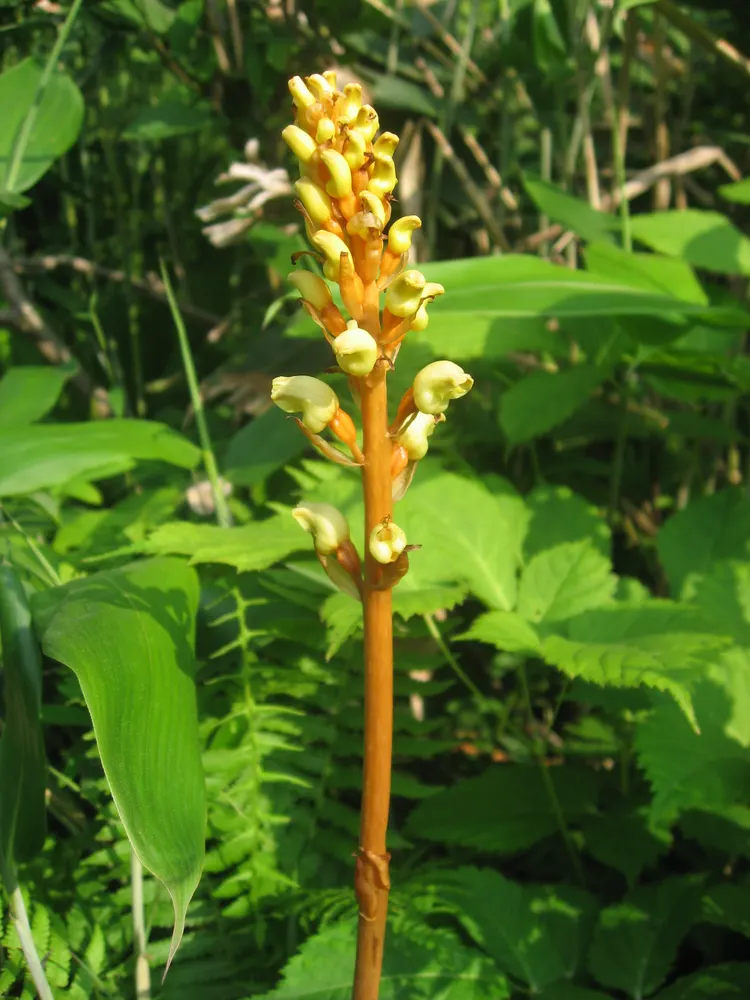
Photo: Qwert1234, Public domain (via Wikimedia Commons)
Tianma
Gastrodia elata
Also known as Gastrodia, Chinese Gastrodia, Heaven's Hemp Tuber, Tian Ma, Chunma (winter tianma)
Key benefits
✦Traditional uses
✦Tianma has been treasured in Chinese medicine for over two thousand years, first recorded in the ancient Divine Farmer's Classic and named for the idea that it settles what the old physicians called internal wind, the trembling, spinning, headachy imbalance behind dizziness and convulsive complaint. Generations of practitioners in China, Korea, and Japan turned to the dried tuber for headaches, vertigo, numbness in the limbs, and the restlessness that keeps a person from sleep. It also found its way into the kitchen, simmered into tonic soups with fish head or chicken, a dish still served in parts of China as both nourishment and medicine at once. Because the plant is so strange, a leafless orchid that never once turns green, herbalists have long regarded it as a singular, almost otherworldly root.
How to grow & use it
✦The full apothecary for Tianma
Traditional remedies and step-by-step preparations, a complete growing guide, and how to harvest, dry, and store it, all unlocked with HerbLens Unlimited.
- ✦Remedies & preparations
- ✦ Growing guide
- ✦Harvest & storage
From under $6 a month. Free plant identifications always included.
- ✦Poria (Fu Ling)
- ✦Uncaria (Gou Teng)
- ✦Ligusticum (Chuan Xiong)
- ✦Uncaria rhynchophylla (Gou Teng)
- ✦Ligusticum wallichii root
“When the head grows heavy and the ground won't quite hold still, tianma has long been the root that steadies the storm within.”
Gastrodia elata has no leaves and no chlorophyll at all. It spends most of its life as a bare tuber underground, surviving entirely by tapping into the honey fungus Armillaria mellea for nourishment, then sends up a single leafless flower stalk once a year before vanishing back below the soil.
Gastrodia elata is not known to be toxic at traditional culinary or medicinal doses, but it does have a traditional reputation for sedative, calming effects, so it may add to the drowsiness caused by sleep aids, sedatives, or anti-anxiety medications. Safety data for pregnancy and breastfeeding is insufficient, so it is best avoided during those times. People taking blood pressure medication or preparing for surgery should be cautious, since tianma has traditionally been associated with effects on blood pressure and central nervous system activity. Wild populations of Gastrodia elata are increasingly scarce and protected in parts of China, so foraging is discouraged; look instead for cultivated, reputably sourced dried tuber. As always, speak with a qualified healthcare provider or herbalist before using tianma, especially if pregnant, nursing, or taking other medications.