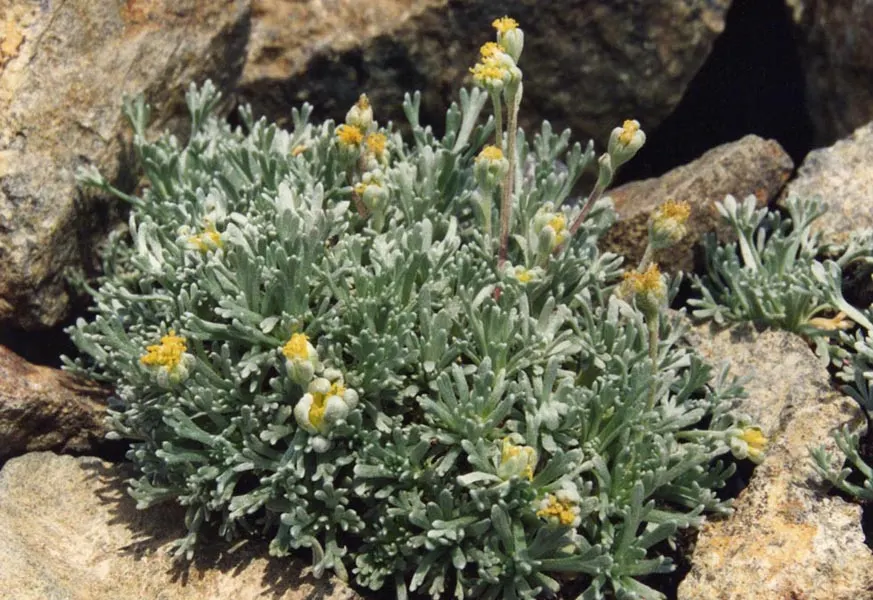
Photo: Ghislain118 (AD) http://www.fleurs-des-montagnes.net, CC BY-SA 3.0 (via Wikimedia Commons)
Genepi (Alpine Wormwood)
Artemisia umbelliformis
Also known as Alpine Wormwood, White Genepi, Genepi des Glaciers, Mountain Wormwood
Key benefits
✦Traditional uses
✦High in the Alps, where almost nothing else dares to flower, shepherds and mountaineers have long gathered genepi's silvery, aromatic tufts to steep into a bracing tea or to infuse into the famous liqueur that shares its name. It was carried in pockets and rucksacks as a remedy for the chill, fatigue, and sluggish digestion that come with long days at altitude, and it became something of a badge of honor among climbers, who considered finding and picking it a small mountaineering feat in itself. Village apothecaries across the French, Italian, and Swiss Alps kept dried genepi on hand as a bitter digestive herb, valued the way other regions valued chamomile or mint. Today it remains one of the most cherished plants of alpine folk herbalism, still gathered under strict local protections in many areas.
How to grow & use it
✦The full apothecary for Genepi (Alpine Wormwood)
Traditional remedies and step-by-step preparations, a complete growing guide, and how to harvest, dry, and store it, all unlocked with HerbLens Unlimited.
- ✦Remedies & preparations
- ✦ Growing guide
- ✦Harvest & storage
From under $6 a month. Free plant identifications always included.
- ✦Peppermint
- ✦Chamomile
- ✦Yarrow
- ✦Roman chamomile (for a milder digestive tea)
- ✦Wormwood (a related bitter, used with the same caution)
“For the bracing, bittersweet lift of a mountain herb gathered where the air runs thin.”
Genepi is the herb behind the pale, herbaceous alpine liqueur of the same name, and in much of the French and Italian Alps wild harvesting is now legally restricted because generations of enthusiastic pickers nearly stripped it from the high slopes it calls home.
Like other wormwoods, genepi contains thujone, which is unsafe in concentrated, prolonged, or high doses, so traditional use is occasional and in modest amounts only. Avoid it during pregnancy and breastfeeding, with children, or if allergic to ragweed, chrysanthemums, or other Asteraceae. It is a protected species in parts of the Alps, so source it from a reputable grower rather than foraging.