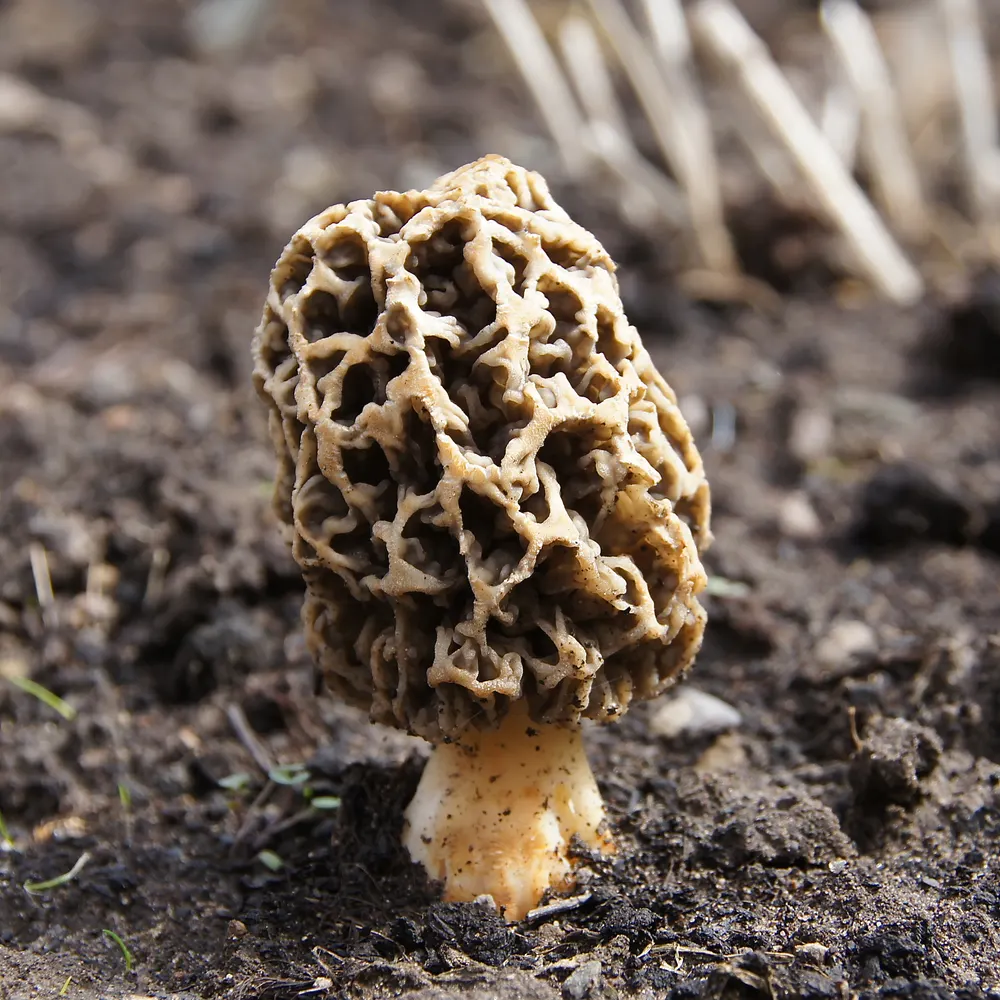
Photo: TOMMES-WIKI, CC BY-SA 3.0 (via Wikimedia Commons)
Morel (Yellow Morel)
Morchella esculenta
Also known as Yellow Morel, True Morel, Sponge Mushroom, Molly Moocher, Honeycomb Mushroom
Key benefits
✦Traditional uses
✦Long before they became a coveted restaurant ingredient, morels were a genuine spring event for foraging families across Europe, Asia, and North America, who tracked old orchards, elm groves, and burn sites year after year for the first honeycombed caps of the season. In parts of China, dried morels (yangdujun) have traditionally been used in the kitchen and in folk healing to support digestion and settle the stomach after a heavy winter diet, valued as much for their prized status as for their flavor. Across Appalachia, morel hunting known as mushroom hunting for molly moochers became its own springtime tradition, passed down through families as a closely guarded secret of good patches.
How to grow & use it
✦The full apothecary for Morel (Yellow Morel)
Traditional remedies and step-by-step preparations, a complete growing guide, and how to harvest, dry, and store it, all unlocked with HerbLens Unlimited.
- ✦Remedies & preparations
- ✦ Growing guide
- ✦Harvest & storage
From under $6 a month. Free plant identifications always included.
- ✦Thyme
- ✦Parsley
- ✦Chives
- ✦Shiitake mushroom
- ✦Oyster mushroom
“When the spring rains have finally warmed the ground and the forest floor is ready to give up its most elusive, honeycombed treasure.”
Morels are pyrophilic, meaning fire-loving. Foragers have long known that the spring after a forest burns often brings the heaviest morel flush of all, as the fungus responds to the disturbed, ash-enriched soil left behind.
Morels must always be cooked thoroughly, since even true morels are toxic raw, and alcohol can worsen reactions in some people. The real danger is misidentification: toxic false morels (Gyromitra species) resemble true morels and can cause serious illness or death, so never eat one you cannot identify with complete confidence.