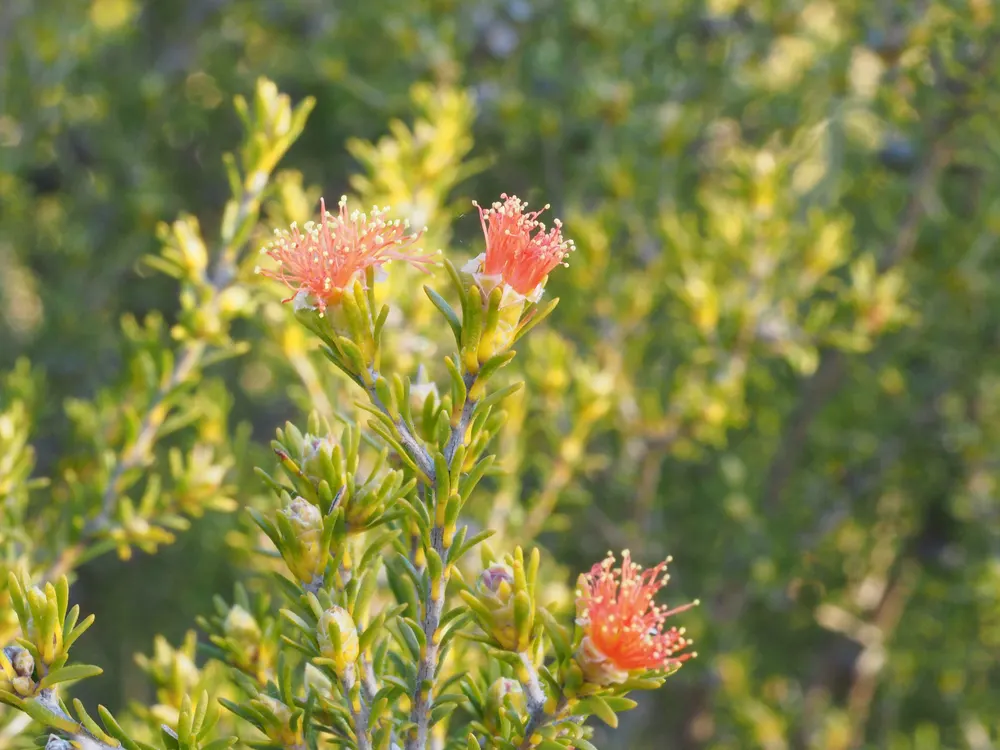
Photo: Geoff Derrin, CC BY-SA 4.0 (via Wikimedia Commons)
Tall Eremaea
Eremaea pauciflora
Also known as Yellow Eremaea, Few-flowered Eremaea
Key benefits
✦Traditional uses
✦Eremaea pauciflora is not a plant with a documented history in herbal medicine or the kitchen. It belongs instead to the quieter tradition of the Western Australian bush garden, one of the many wiry, wildflower shrubs that colonists and botanists alike found scattered across the sandplains southeast of Perth. First described in the nineteenth century by the English botanist John Lindley during his survey of the colony's remarkable flora, it earned its species name pauciflora, meaning few flowered, for the modest, scattered way its blooms appear along the branches rather than in showy clusters. Its real value has always been ecological and ornamental rather than medicinal, a small gold note in a hard, sandy landscape that native bees and honeyeaters rely on when little else is in flower.
How to grow & use it
✦The full apothecary for Tall Eremaea
Traditional remedies and step-by-step preparations, a complete growing guide, and how to harvest, dry, and store it, all unlocked with HerbLens Unlimited.
- ✦Remedies & preparations
- ✦ Growing guide
- ✦Harvest & storage
From under $6 a month. Free plant identifications always included.
- ✦Verticordia (featherflower)
- ✦Melaleuca
- ✦Grevillea
- ✦Chamelaucium (Geraldton waxflower)
- ✦Verticordia
“For the gardener who wants a little of Western Australia's wild gold sandplain, not the medicine cabinet.”
The genus Eremaea takes its name from the Greek eremos, meaning solitary or desert, a nod to the isolated sandplain heathland these shrubs call home. Botanists place it in the same tribe as the featherflowers of the genus Verticordia, and the resemblance shows in their fine, wiry foliage.
Tall eremaea is grown as an ornamental plant and is not eaten or used medicinally.