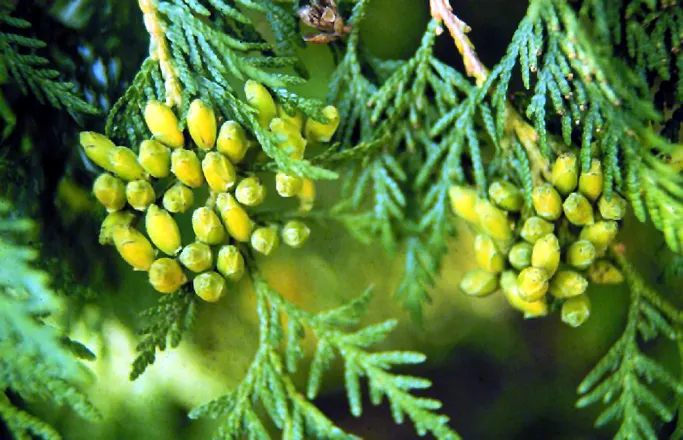
Photo: Public domain (via Wikimedia Commons)
Northern White Cedar
Thuja occidentalis
Also known as Eastern Arborvitae, American Arborvitae, Tree of Life, Swamp Cedar
Traditional uses
✦Northern white cedar carries one of the most famous survival stories in botanical history. In 1536, Jacques Cartier's crew, stranded and dying of scurvy along the St. Lawrence River, was taught by the Iroquois to brew the needles into a drink that saved dozens of lives. Cartier is said to have named the tree arbor vitae, tree of life, in gratitude. Beyond that winter, various Indigenous nations of the northeast used the wood for canoe frames, baskets, and lodge poles, and applied the crushed foliage externally to the skin. Because the tree is rich in thujone, a compound that is toxic when ingested in any real quantity, its story belongs more to craft, shelter, and topical folk use than to the tea kettle.
How to grow & use it
✦The full apothecary for Northern White Cedar
Traditional remedies and step-by-step preparations, a complete growing guide, and how to harvest, dry, and store it, all unlocked with HerbLens Unlimited.
- ✦Remedies & preparations
- ✦ Growing guide
- ✦Harvest & storage
From under $6 a month. Free plant identifications always included.
- ✦Calendula
- ✦Witch hazel
- ✦Eastern hemlock foliage (for historic vitamin C lore only, not interchangeable in use)
“When you want a living wall that holds its green through the coldest months, the arborvitae stands its ground.”
The tree's common name arborvitae, Latin for tree of life, comes directly from the scurvy cure Jacques Cartier's crew received from the Iroquois in the winter of 1536, one of the earliest documented moments of Indigenous plant knowledge saving European lives in North America.
Northern white cedar is toxic if ingested and should never be taken internally as a tea, tincture, or supplement in any home setting. Its foliage and essential oil contain thujone, a compound that can cause seizures, vomiting, kidney and liver damage, and in significant doses has been fatal. The plant has a dark historical use as a folk abortifacient, and that use has caused serious harm and death; it must never be used for this or any internal purpose, especially during pregnancy. It is also toxic to pets and livestock if browsed or chewed in quantity. Any topical, homeopathic, or professionally prepared form of thuja should only be used under the direct guidance of a qualified, licensed healthcare provider or herbalist who can assess safe, appropriate use, and anyone considering it for any reason should speak with a doctor first.