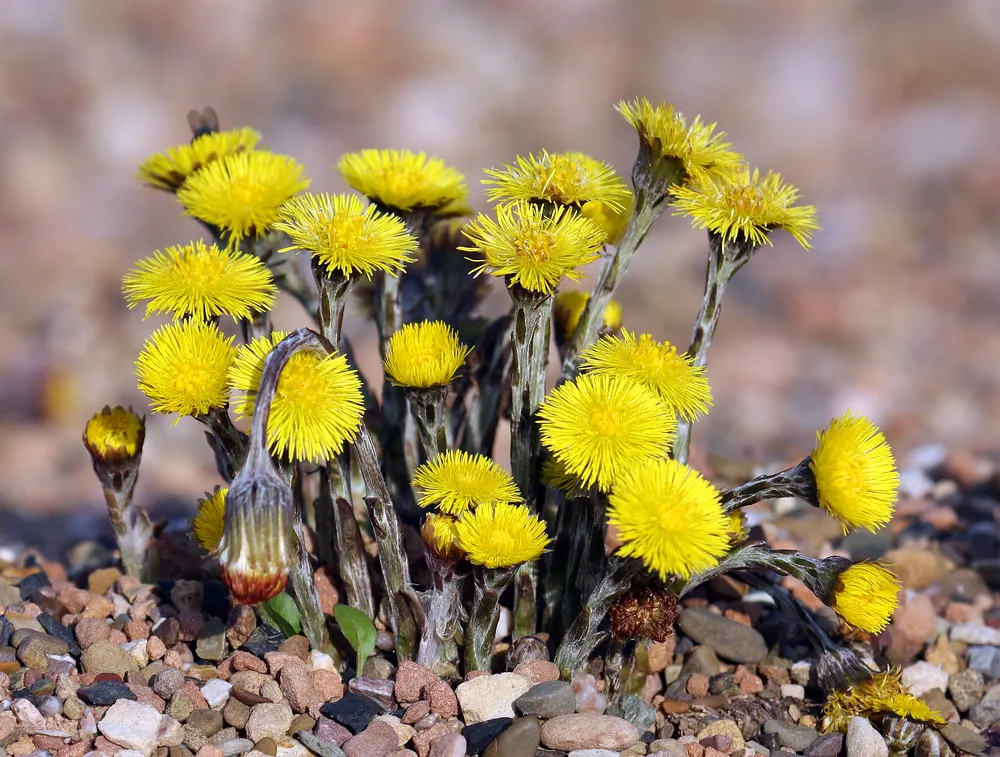
Photo: Andreas Trepte, CC BY-SA 2.5 (via Wikimedia Commons)
Coltsfoot
Tussilago farfara
Also known as Coughwort, Son-Before-Father, Horsehoof, Foalswort, British Tobacco
Key benefits
✦Traditional uses
✦Coltsfoot's very name tells its story. Tussilago comes from the Latin tussis, meaning cough, and agere, to drive away, and for well over two thousand years European herbalists reached for this cheerful yellow flower whenever a cough or a scratchy throat needed calming. Physicians from ancient Greece through the medieval herbals of Culpeper and Gerard praised it, and country folk dried the leaves to smoke for chest complaints, a practice that lingered in some rural corners of Britain and France well into the last century. So closely was coltsfoot tied to the healer's trade that its flower became a kind of trademark, painted above apothecary doors as a sign of the herbalist within.
How to grow & use it
✦The full apothecary for Coltsfoot
Traditional remedies and step-by-step preparations, a complete growing guide, and how to harvest, dry, and store it, all unlocked with HerbLens Unlimited.
- ✦Remedies & preparations
- ✦ Growing guide
- ✦Harvest & storage
From under $6 a month. Free plant identifications always included.
- ✦Mullein
- ✦Licorice root
- ✦Thyme
- ✦Mullein leaf
- ✦Plantain
“When the first hopeful flowers of the year push up through still-cold ground, weeks before a single leaf dares to show itself.”
In France, the coltsfoot flower was such a recognizable emblem of the herbalist's craft that it was painted directly onto the doorframes and signage of apothecary shops, a plant so trusted for coughs that it became shorthand for the whole profession.
Tussilago farfara naturally contains pyrrolizidine alkaloids (PAs), compounds well documented to cause liver damage and considered potentially carcinogenic with repeated or prolonged internal use. Because of this, coltsfoot has been restricted or banned for internal use in several countries, and case reports have linked coltsfoot tea consumed during pregnancy to serious, sometimes fatal, liver injury in nursing infants. It should never be taken internally by children, during pregnancy or breastfeeding, or by anyone without professional guidance and clear confirmation that a product is certified PA-free, and even then only under the direction of a qualified herbalist or healthcare provider who can weigh the real risks involved.