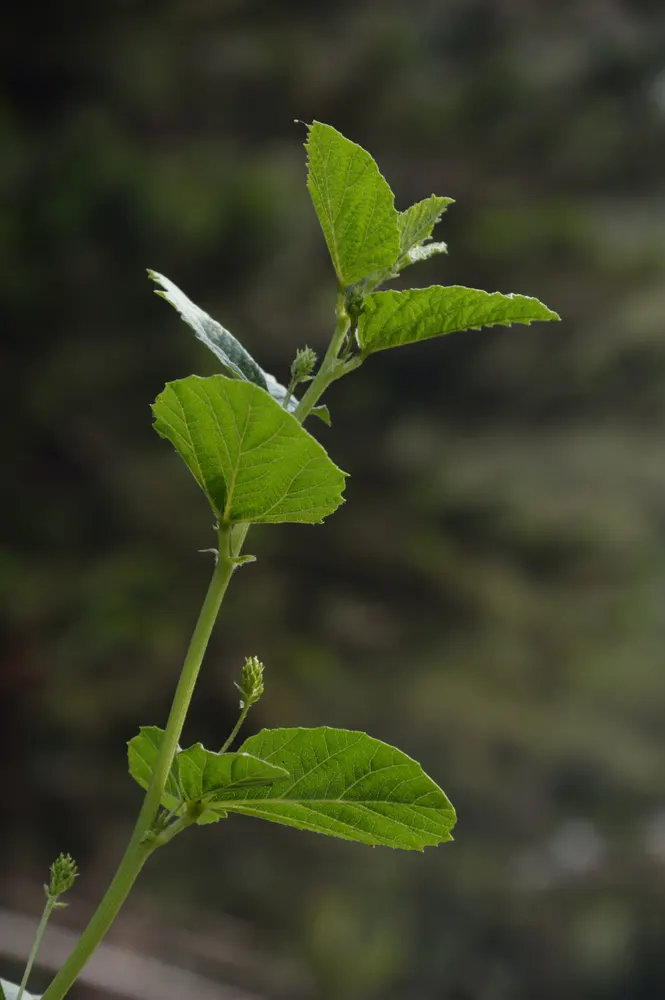
Photo: Biswarup Ganguly, CC BY 3.0 (via Wikimedia Commons)
Babchi
Psoralea corylifolia
Also known as Bakuchi, Bu Gu Zhi, Malaytea Scurfpea, Purple Fleabane, Kushtanashini
Key benefits
✦Traditional uses
✦Long before dermatologists began using psoralen compounds in light-box therapy, healers across India and China were turning to the small, dark seeds of Babchi for the very same purpose, restoring color to skin marked by vitiligo and other patches of pigment loss. In Ayurvedic medicine it was known as a purifier of the blood and skin, while in Traditional Chinese Medicine, where it is called Bu Gu Zhi, meaning literally 'tonify the bone,' it found a place among the great kidney-yang tonics, prescribed for aching joints, weak knees, and the frailty of advancing age. Its seeds traveled the old trade routes tucked into countless formulas, valued as much for their reputation as a hair restorative as for their role in treating stubborn skin conditions. That long, layered history is exactly why modern science took a closer look, and exactly why modern caution is warranted today.
Growing guide
✦Fresh to dried
✦- ✦Eucommia bark (Du Zhong)
- ✦Walnut kernel (Hu Tao Ren)
- ✦Cistanche
- ✦Epimedium (Horny Goat Weed)
- ✦Cuscuta seed (Dodder)
“The seed apothecaries of old India and China reached for when the skin lost its color and the years began to settle into the bones.”
The psoralen compounds first studied in Babchi seeds became the foundation of PUVA therapy, a light-based treatment still used in dermatology clinics today, where patients take a psoralen compound and are then exposed to controlled UVA light to treat vitiligo and psoriasis, a direct scientific echo of the plant's centuries-old traditional use.
Babchi seeds contain concentrated furanocoumarins that can cause severe burning, blistering, and lasting skin discoloration when exposed to sunlight after contact. Taken internally, it has been linked to serious liver injury in medical case reports, is considered unsafe in pregnancy, and may interact with other photosensitizing or liver-affecting medications. It should only be used under direct guidance from a licensed healthcare professional.