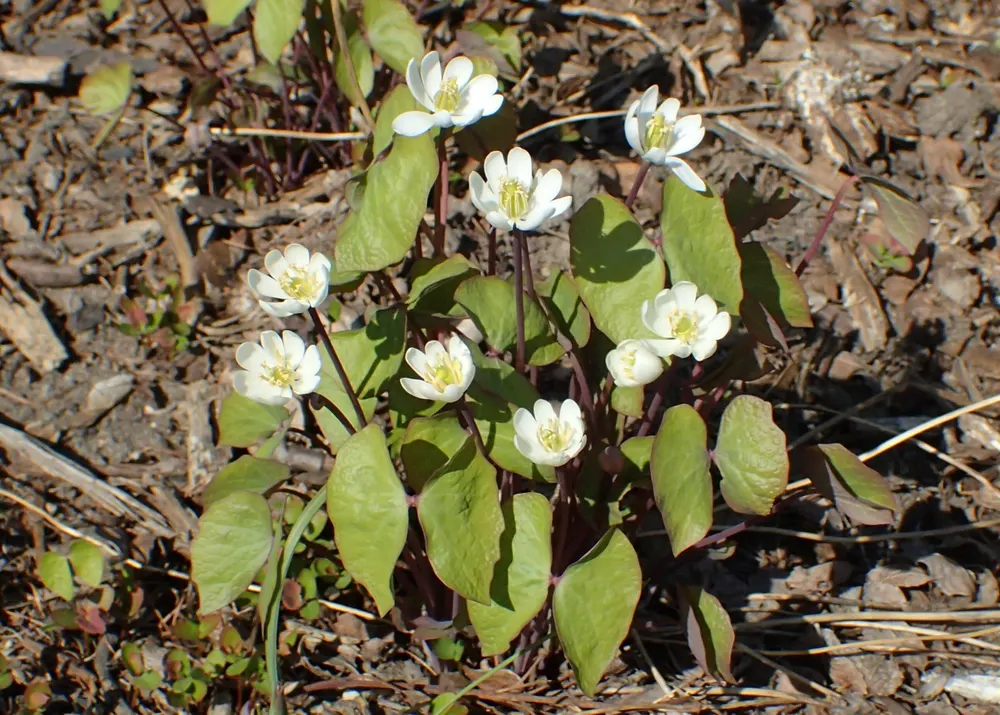
Photo: Krzysztof Ziarnek, Kenraiz, CC BY-SA 4.0 (via Wikimedia Commons)
Twinleaf
Jeffersonia diphylla
Also known as Rheumatism Root, Ground Squirrel Pea, Helmet Pod
Key benefits
✦Traditional uses
✦Twinleaf earned its old country name, rheumatism root, from the way nineteenth-century American physicians and home healers turned to its dried rhizome for aching, swollen joints. It was official in the United States Pharmacopoeia for several decades in the 1800s, prescribed as a diuretic and expectorant and applied as a poultice to sores and ulcers. Cherokee and other Native healers likewise used the root in washes and preparations for inflammation and skin complaints long before Eclectic physicians adopted it into their own dispensatories. By the twentieth century its use faded, edged out by more predictable remedies, and today it survives mostly as a woodland wildflower prized for its beauty rather than its medicine chest.
How to grow & use it
✦The full apothecary for Twinleaf
Traditional remedies and step-by-step preparations, a complete growing guide, and how to harvest, dry, and store it, all unlocked with HerbLens Unlimited.
- ✦Remedies & preparations
- ✦ Growing guide
- ✦Harvest & storage
From under $6 a month. Free plant identifications always included.
- ✦Black cohosh
- ✦Wild ginger
- ✦Bloodroot (as a fellow spring woodland companion, not for self-dosing)
- ✦Black cohosh
- ✦Meadowsweet
“For the hush of the first spring woodland bloom, and a nod to the old rheumatism root of the apothecary's shelf.”
Twinleaf was named Jeffersonia in 1792 by the botanist Benjamin Smith Barton in honor of Thomas Jefferson, making it one of only a small handful of plants ever named for a sitting or future American president.
Twinleaf root has fallen out of use because larger doses act as a purgative and emetic, causing vomiting and digestive upset, and no safe internal dose is established. It's also a slow-growing, increasingly uncommon woodland plant, so it should never be foraged; enjoy it only as a garden plant from nursery stock.