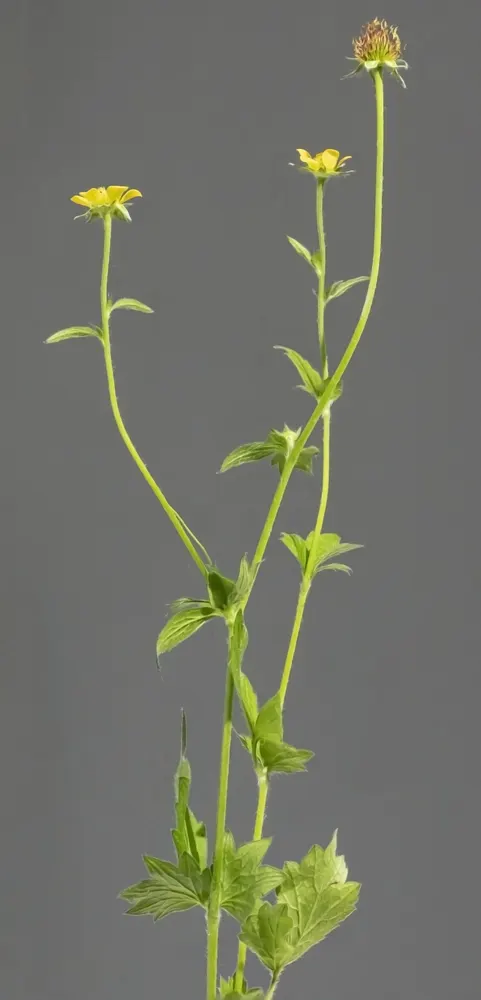
Photo: Didier Descouens, CC BY-SA 4.0 (via Wikimedia Commons)
Wood Avens
Geum urbanum
Also known as Herb Bennet, Clove Root, St. Benedict's Herb, Colewort
Key benefits
✦Traditional uses
✦In medieval Europe, wood avens was called herba benedicta, the blessed herb, and was planted by doorways in the belief that it warded off evil spirits and venomous creatures. Its root carries a warm, clove-like fragrance thanks to natural eugenol, which led cottage brewers to drop it into ale and wine casks in place of true cloves. Herbalists of old turned to the astringent root as a gentle remedy for upset stomachs and occasional diarrhea, and as a gargle to soothe a scratchy throat and firm the gums. Country folk also tucked the dried root among linens, prizing its fragrance as much as its reputed protective power.
How to grow & use it
✦The full apothecary for Wood Avens
Traditional remedies and step-by-step preparations, a complete growing guide, and how to harvest, dry, and store it, all unlocked with HerbLens Unlimited.
- ✦Remedies & preparations
- ✦ Growing guide
- ✦Harvest & storage
From under $6 a month. Free plant identifications always included.
- ✦Chamomile
- ✦Peppermint
- ✦Meadowsweet
- ✦Tormentil root
- ✦Cinquefoil root
“When you want a gentle, old-fashioned astringent to settle a restless stomach or ease a scratchy throat.”
The genus name Geum traces back to a Greek word for a pleasant fragrance, and country brewers once dropped wood avens root straight into ale and wine barrels as a homegrown stand-in for real cloves.
Wood avens is not known to be toxic, but its root is rich in tannins, and taken in excess or over a long stretch it may cause stomach upset or interfere with the body's absorption of iron and certain medications. Its safety in pregnancy and breastfeeding has not been well studied, so it is best set aside during those times. Anyone sensitive to plants in the rose family should proceed with caution. As always, speak with a qualified healthcare provider before using wood avens medicinally, particularly if you take other medications.