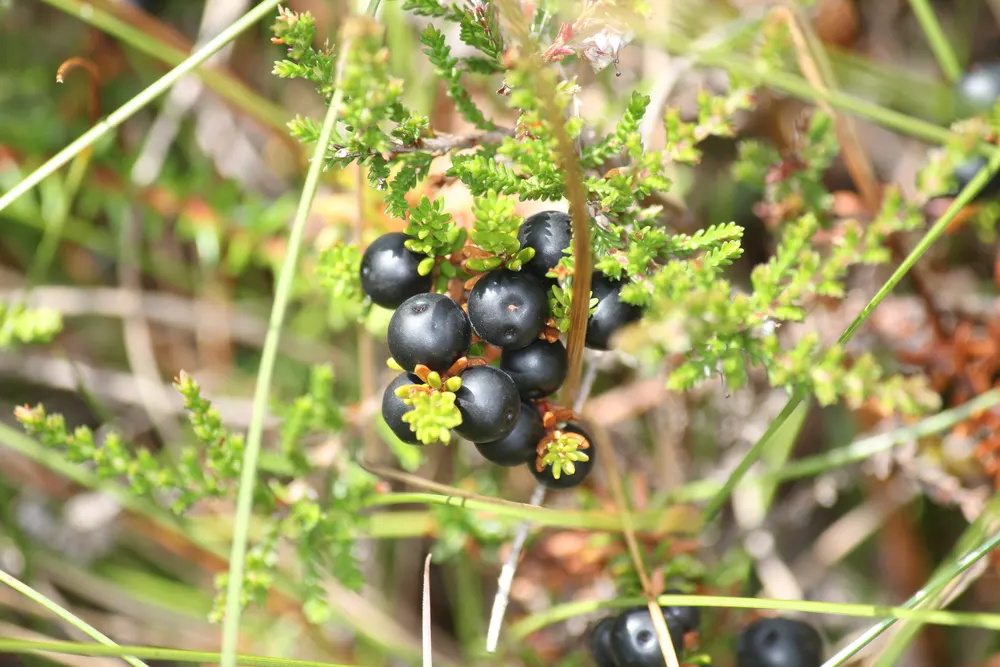
Photo: Maseltov, CC BY-SA 3.0 de (via Wikimedia Commons)
Mountain Crowberry
Empetrum hermaphroditum
Also known as Arctic Crowberry, Northern Crowberry, Rockberry
Key benefits
✦Traditional uses
✦Long before supply trucks reached the far north, mountain crowberry was one of the plants that kept people fed through brutal seasons. Sami reindeer herders, Inuit families, and other circumpolar peoples gathered its small black berries by the handful, prizing them because they cling to the plant and stay edible well into winter, sometimes even under snow. Travelers crossing the tundra ate the juicy berries raw to relieve thirst and fatigue on long journeys, and the fruit was traditionally stewed, mixed with fat or fish, or dried for the lean months. In several northern folk traditions a simple decoction of the berries was taken to settle an upset stomach.
How to grow & use it
✦The full apothecary for Mountain Crowberry
Traditional remedies and step-by-step preparations, a complete growing guide, and how to harvest, dry, and store it, all unlocked with HerbLens Unlimited.
- ✦Remedies & preparations
- ✦ Growing guide
- ✦Harvest & storage
From under $6 a month. Free plant identifications always included.
- ✦Bilberry
- ✦Lingonberry
- ✦Bearberry
- ✦Bilberry
- ✦Wild blueberry
“For the hardy little berry that holds its ground where almost nothing else will grow, dark and tart against the snow.”
The species name hermaphroditum refers to its flowers, which carry both male and female parts in the same bloom. That sets it apart from its close cousin, common crowberry (Empetrum nigrum), which across most of its range grows as separate male and female plants.
Mountain crowberry berries are safe to eat, though a large quantity at once can have a mild laxative effect.