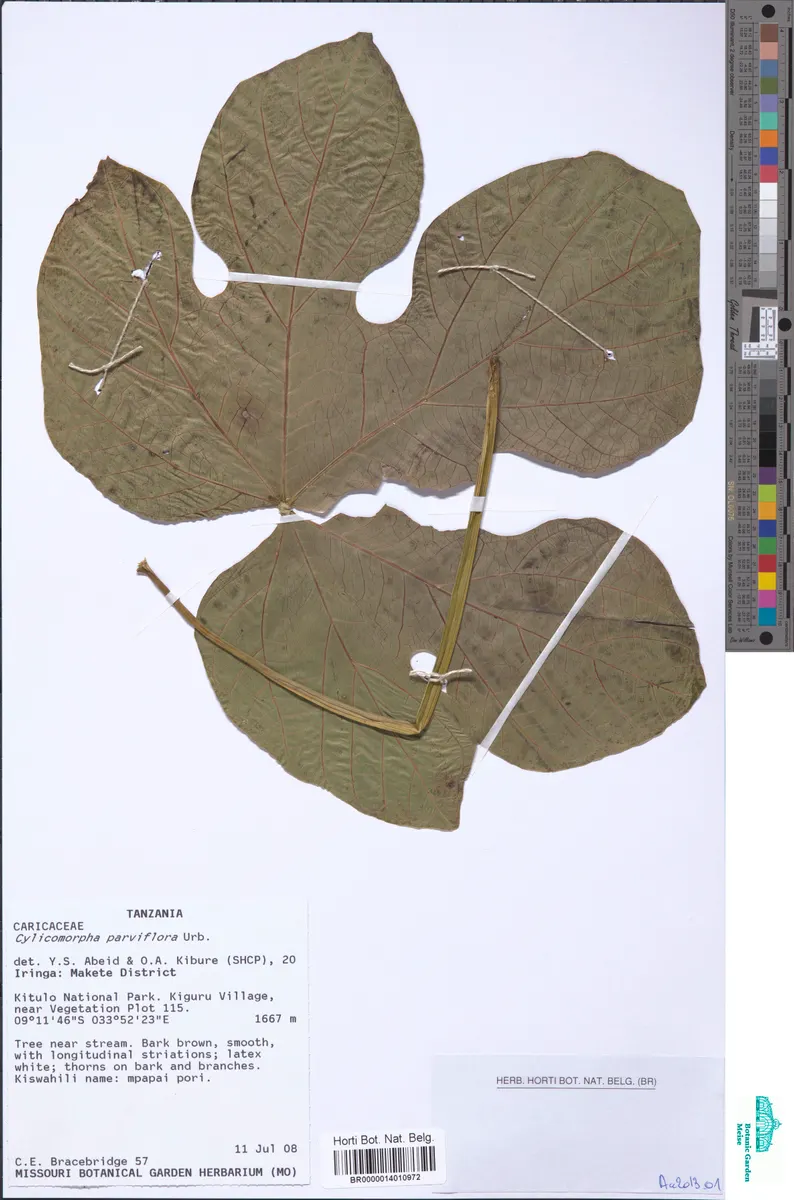
Photo: Meise Botanic Garden, CC BY (via GBIF)
Forest Papaya
Cylicomorpha parviflora
Also known as African Forest Papaya, Mountain Pawpaw Tree, Wild Papaya Tree
Key benefits
✦Traditional uses
✦Cylicomorpha parviflora is one of only two species in its genus, a shy, soft wooded tree that shelters in the misty highland forests of East Africa, far from the sunny orchards where its cousin the papaya is grown. Unlike Carica papaya, it has not made its way into the wider world's spice cabinets or apothecary shelves, and no well documented body of traditional medicinal use has come down to us for this particular tree. What we do know comes mostly from botanists and foresters who have recorded it as a striking, little studied member of the papaya family, valued more for its place in the forest canopy than for any harvest. Where local communities near its native range may hold their own knowledge of the tree, that knowledge has not been reliably recorded in the literature available to us, so we choose honesty over invention here.
How to grow & use it
✦The full apothecary for Forest Papaya
Traditional remedies and step-by-step preparations, a complete growing guide, and how to harvest, dry, and store it, all unlocked with HerbLens Unlimited.
- ✦Remedies & preparations
- ✦ Growing guide
- ✦Harvest & storage
From under $6 a month. Free plant identifications always included.
- ✦No established herbal pairings; its closest living kin is Carica papaya, the familiar orchard papaya
- ✦Vasconcellea species (the mountain papayas of South America), fellow members of the Caricaceae family
- ✦Carica papaya (papaya) is the closest relative, though it is not a direct substitute in any traditional preparation
“For the quiet wonder of standing beneath a rare, mist forest cousin of the papaya that few outside East Africa have ever seen.”
The genus name Cylicomorpha comes from the Greek kylix, meaning cup, a nod to the cup shaped floral parts of its flowers, while parviflora is simply Latin for small flowered. It is one of just two species in the entire genus, both confined to the misty forests of tropical Africa, and both are true woody trees, unlike the soft, pithy, almost herbaceous stem of the papaya you might find at the grocery store.
Forest papaya has no established tradition of eating or internal use, and related papaya-family plants contain latex that can irritate skin, so unripe fruit or seeds should be avoided, especially during pregnancy.