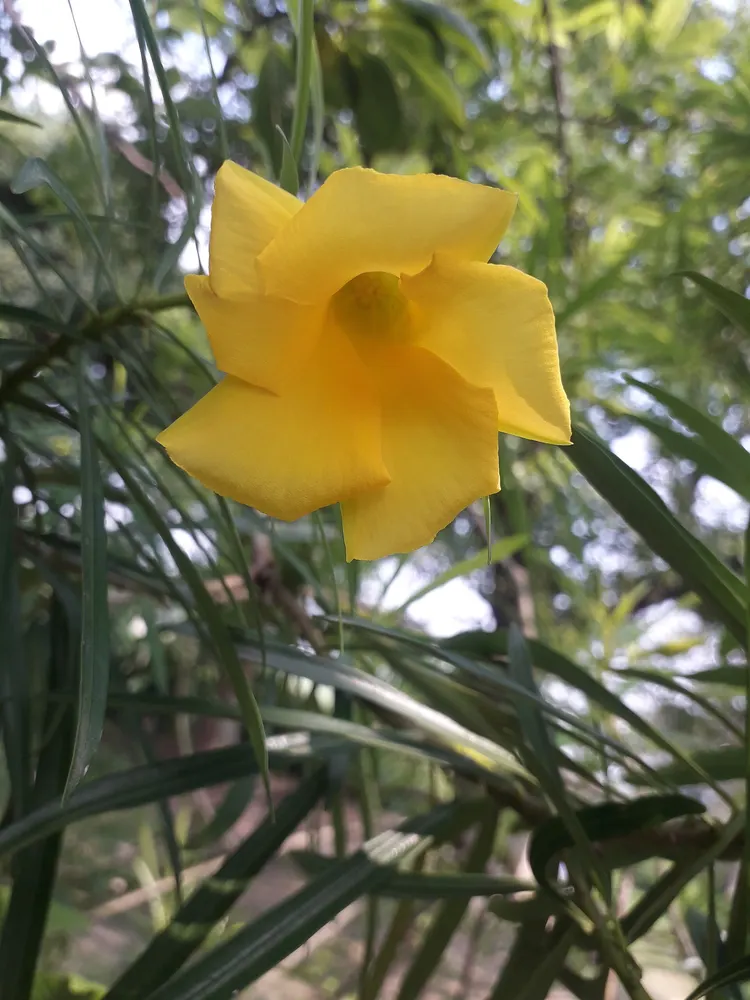
Photo: Anshik Kumar Tiwari, CC BY-SA 4.0 (via Wikimedia Commons)
Yellow Oleander
Thevetia peruviana
Also known as Yellow oleander, Be-still tree, Lucky nut, Trumpet flower, Cabalonga
Key benefits
✦Traditional uses
✦In parts of its native range and in South Asia, where it was introduced as an ornamental, folk healers historically experimented with tiny external preparations of yellow oleander bark or sap for skin conditions, and the crushed seeds were sometimes used as a rat poison or fish poison. None of these traditional applications were ever considered safe for internal use, and the plant has instead become best known in ethnobotanical and toxicology literature as one of the most common sources of accidental and intentional poisoning in the regions where it grows, since its seeds closely resemble a harmless nut. Its story today is really a caution passed down through generations of gardeners rather than a remedy passed down through generations of healers. Modern pharmacology has studied its potent cardiac glycosides, thevetin and related compounds, chiefly to understand and treat poisoning cases, not to develop them into medicine.
How to grow & use it
✦The full apothecary for Yellow Oleander
Traditional remedies and step-by-step preparations, a complete growing guide, and how to harvest, dry, and store it, all unlocked with HerbLens Unlimited.
- ✦Remedies & preparations
- ✦ Growing guide
- ✦Harvest & storage
From under $6 a month. Free plant identifications always included.
“A plant to admire from a garden path, never to bring into a teacup.”
The shiny, triangular seeds of yellow oleander are sometimes called lucky nuts and have been strung into necklaces or carried as charms in parts of the tropics, even though a single seed contains enough cardiac glycoside to seriously endanger a person's heart rhythm.
Every part of Thevetia peruviana, especially the seeds, sap, bark, and roots, contains potent cardiac glycosides (notably thevetin) that are chemically similar to digoxin and can cause life-threatening heart arrhythmias, vomiting, and death if chewed or swallowed, even in small amounts. It is one of the leading causes of plant poisoning deaths in parts of South Asia and is a recognized hazard wherever it is grown ornamentally, so seeds, leaves, and flowers should be kept well out of reach of children, pets, and livestock, and the milky sap can also irritate skin and eyes on contact. This plant should never be prepared as a tea, tincture, or any other ingestible remedy, and it may dangerously interact with heart medications such as digoxin. If ingestion is suspected, treat it as a medical emergency and contact poison control or a doctor immediately rather than attempting any home treatment; anyone drawn to this plant for its history or beauty should enjoy it strictly as a garden ornamental and consult a qualified physician or toxicologist with any real concerns.