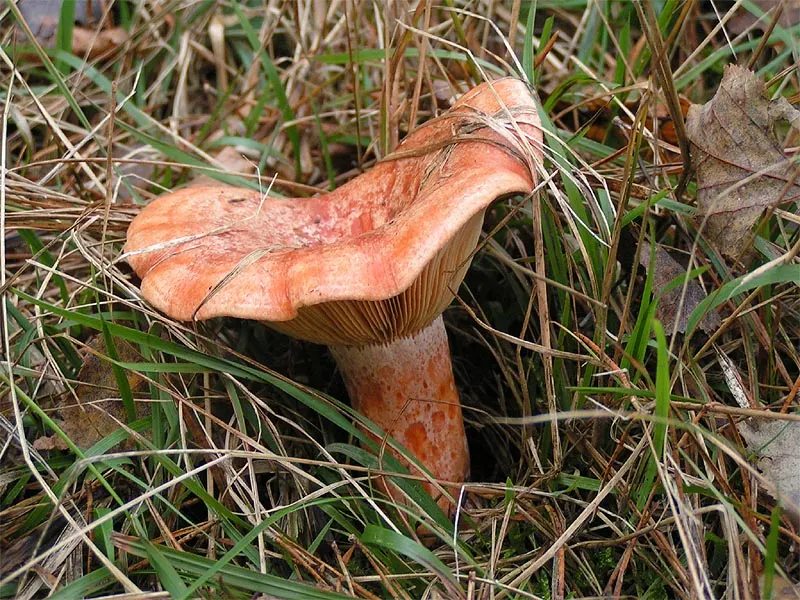
Photo: CC BY-SA 3.0 (via Wikimedia Commons)
Saffron Milk Cap
Lactarius deliciosus
Also known as Saffron Milk Cap, Red Pine Mushroom, Delicious Milk Cap, Rovellón (Catalan), Ryzhik (Russian and Polish)
Key benefits
✦Traditional uses
✦Long before it had a Latin name, this mushroom was filling market baskets across pine-forested Europe. In Catalonia it is called the rovelló and welcomed each fall with near-ceremony, while across Poland, Russia, and Ukraine the ryzhik was salted down in barrels every autumn to see families through winter, prized enough to be shipped to imperial tables in old Russia. It has never held a place in medicinal herbalism, its story belongs to the kitchen and the forest floor, where generations learned to read the pines and the rain for its arrival. The mushroom's habit of bleeding a bright orange, saffron-colored milk when cut gave it both its common name and its reputation as one of the easier Lactarius species to recognize with confidence.
How to grow & use it
✦The full apothecary for Saffron Milk Cap
Traditional remedies and step-by-step preparations, a complete growing guide, and how to harvest, dry, and store it, all unlocked with HerbLens Unlimited.
- ✦Remedies & preparations
- ✦ Growing guide
- ✦Harvest & storage
From under $6 a month. Free plant identifications always included.
- ✦Garlic
- ✦Thyme
- ✦Fresh parsley
- ✦Chanterelles
- ✦Porcini (for cooked dishes, texture and flavor differ)
“For the forager who follows the pines after the first cold rain, chasing a cap the color of banked embers.”
When sliced, this mushroom bleeds a bright, saffron-orange latex that slowly turns wine-red or greenish where it is bruised or aged, a feature so distinctive that generations of foragers have used it as their first and most trusted clue for a confident identification.
Correct identification is essential, since the Lactarius genus includes similar species with irritating milk, and misidentification is a common cause of forager illness. Always cook it thoroughly rather than eating it raw.