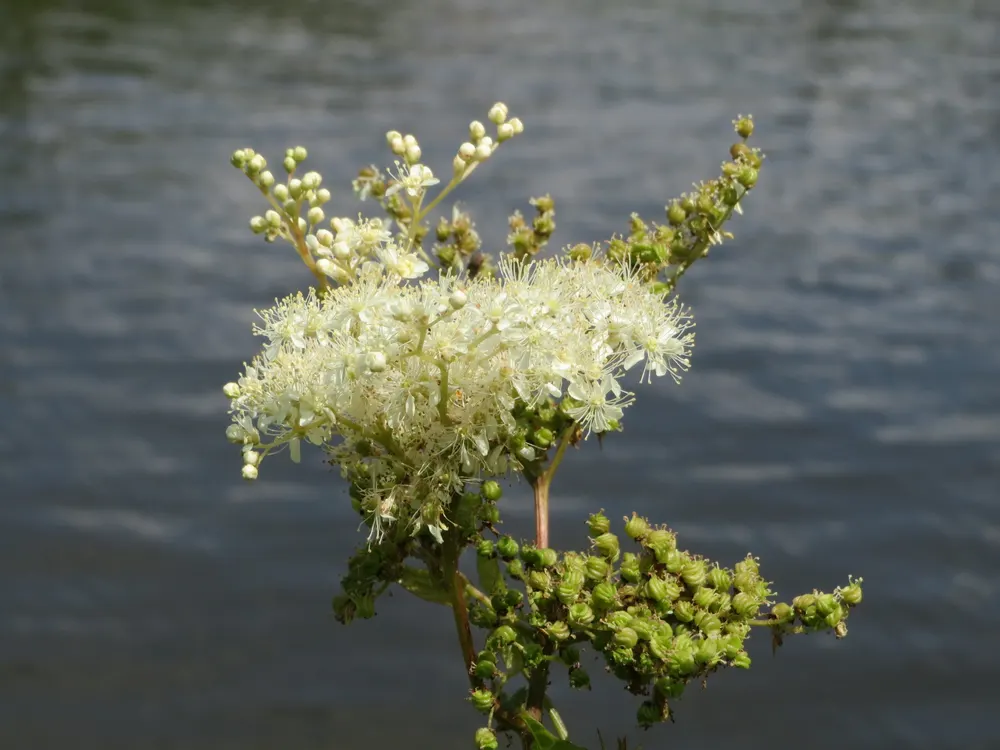
Photo: AnRo0002, CC0 (via Wikimedia Commons)
Meadowsweet
Filipendula ulmaria
Also known as Queen of the Meadow, Meadwort, Bridewort, Lady of the Meadow, Dolloff
Key benefits
✦Traditional uses
✦Meadowsweet has scented European hedgerows and cottage gardens for centuries, its cream colored blossoms once strewn across castle floors for their sweet, almond like fragrance. Folk herbalists reached for it to settle a sour stomach and ease minor aches long before anyone understood why it worked. That understanding arrived in 1838, when chemists first isolated salicylic acid from the plant, then classified as Spiraea ulmaria, a discovery that would eventually lead to the name aspirin. Some accounts also count meadowsweet among the three herbs held most sacred by the ancient druids, alongside vervain and water mint.
How to grow & use it
✦The full apothecary for Meadowsweet
Traditional remedies and step-by-step preparations, a complete growing guide, and how to harvest, dry, and store it, all unlocked with HerbLens Unlimited.
- ✦Remedies & preparations
- ✦ Growing guide
- ✦Harvest & storage
From under $6 a month. Free plant identifications always included.
- ✦Chamomile
- ✦Peppermint
- ✦Ginger
- ✦White willow bark
- ✦Chamomile
“For the queen of the meadow, whose frothy blossoms once perfumed castle floors and settled the stomachs of those who gathered her.”
Meadowsweet quite literally gave aspirin its name. After salicylic acid was isolated from the plant in 1838, Bayer chemists who later synthesized a gentler version of the compound in 1897 named it aspirin, borrowing the a from acetyl and spirin from Spiraea, meadowsweet's old botanical genus.
Meadowsweet contains salicylates, so avoid it if you have an aspirin or salicylate allergy, and don't give it to children or teens recovering from a fever or viral illness because of a Reye's syndrome risk. It may also interact with blood-thinning medication and is generally avoided before surgery.