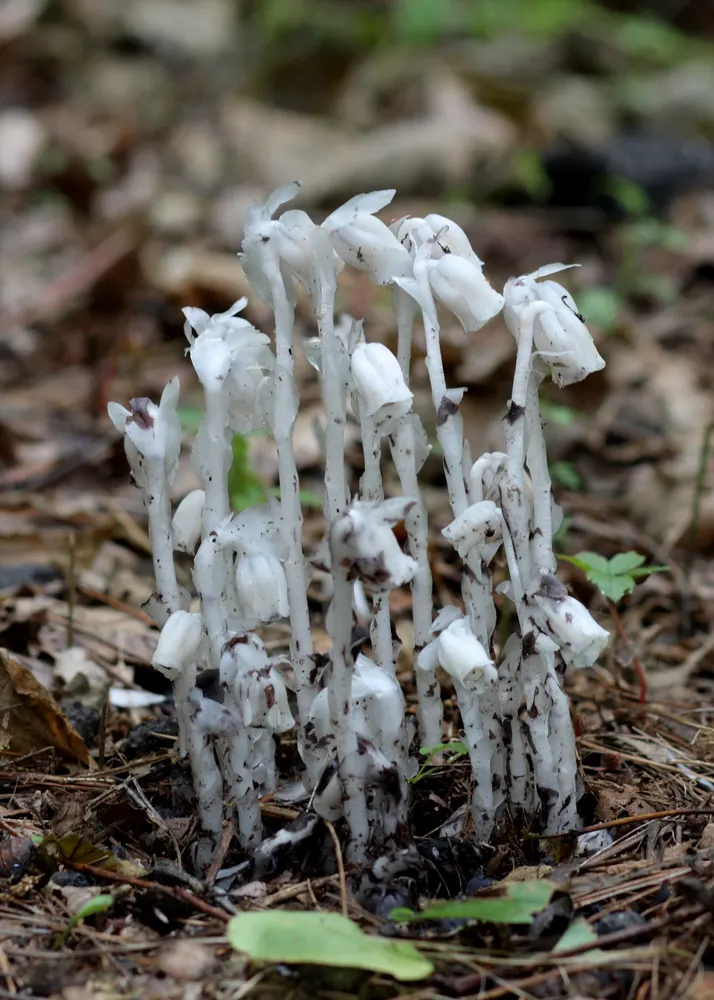
Photo: Sage Ross, CC BY-SA 3.0 (via Wikimedia Commons)
Ghost Pipe
Monotropa uniflora
Also known as Indian Pipe, Corpse Plant, Ghost Flower, Ice Plant, Fairy Smoke
Key benefits
✦Traditional uses
✦Ghost pipe earned its haunting reputation honestly, rising leafless and white from the forest floor like a wisp of smoke caught between the trees. Several Native American nations, including the Cherokee, traditionally used the fresh juice as a wash for sore or inflamed eyes and called on the root for convulsions and nervous complaints. Nineteenth century Eclectic physicians in America later adopted it as a sedative and antispasmodic, prescribing it for restlessness, pain, and fevers when a gentler remedy was needed. Because it withers into a black, translucent ooze soon after picking, it was almost always used fresh, close to the moment it was gathered.
How to grow & use it
✦The full apothecary for Ghost Pipe
Traditional remedies and step-by-step preparations, a complete growing guide, and how to harvest, dry, and store it, all unlocked with HerbLens Unlimited.
- ✦Remedies & preparations
- ✦ Growing guide
- ✦Harvest & storage
From under $6 a month. Free plant identifications always included.
- ✦Skullcap
- ✦Valerian
- ✦St. John's Wort
- ✦Skullcap
- ✦California Poppy
“When the forest floor turns up something pale and otherworldly, and the moment calls for stillness rather than striving.”
Ghost pipe has no green in it at all because it makes no chlorophyll and never photosynthesizes. Instead it taps directly into the mycorrhizal fungal threads that link nearby trees underground, drawing its nourishment secondhand from sugars the trees themselves made in sunlight.
Ghost pipe is poorly studied and traditionally used only in small, drop doses, never dried and eaten. Avoid in pregnancy and nursing, and don't combine with alcohol or sedatives, since interactions aren't well documented.