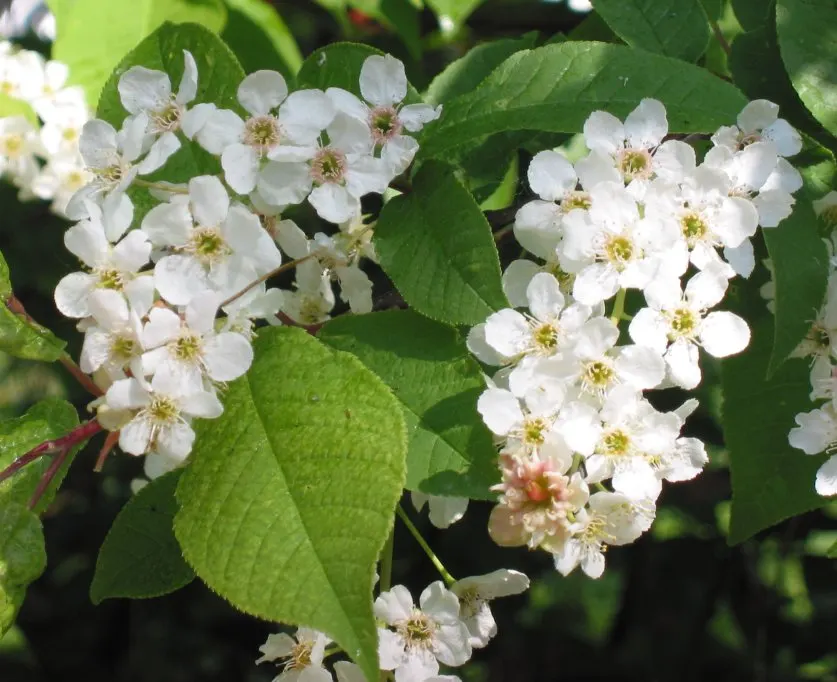
Photo: Rasbak, CC BY-SA 3.0 (via Wikimedia Commons)
Bird Cherry
Prunus padus
Also known as Hackberry, Hagberry, Mayday Tree, European Bird Cherry
Key benefits
✦Traditional uses
✦Across the birch and spruce forests of northern Europe and Siberia, bird cherry has long marked the true arrival of spring, its clusters of almond-scented white flowers opening just as winter finally lets go. In Russia and the Baltic states, the ripe, deep purple-black fruit was traditionally gathered in late summer and, stone and all, ground into a dark flour once baked into the beloved cheryomukha cake, while the destoned flesh flavored preserves, kvass, and homemade spirits. The tree's dense, fragrant blossom made it a favorite of cottage gardens and hedgerows, valued as much for the bees and birds it fed as for the shade it offered. Because its bark, leaves, and seed kernels carry natural cyanogenic compounds, folk use of the plant stayed centered on the ripe fruit rather than the wood or foliage.
How to grow & use it
✦The full apothecary for Bird Cherry
Traditional remedies and step-by-step preparations, a complete growing guide, and how to harvest, dry, and store it, all unlocked with HerbLens Unlimited.
- ✦Remedies & preparations
- ✦ Growing guide
- ✦Harvest & storage
From under $6 a month. Free plant identifications always included.
- ✦Hawthorn
- ✦Rowan
- ✦Blackthorn (sloe)
- ✦Chokecherry fruit
- ✦Blackthorn (sloe) fruit
“For a fragrant spring hedge that hums with bees and later feeds the birds through late summer.”
In the Scottish Highlands, bird cherry was once called the hagberry, a name rooted in the Old Norse heggr, and country folklore linked the tree to witches, warning that its wood should never be burned on the hearth.
Bird cherry bark, leaves, and seed kernels contain cyanogenic compounds and are toxic if chewed or eaten, and wilted leaves have poisoned grazing livestock. The ripe, pitted fruit is fine to eat, but never eat the pits, bark, or leaves.