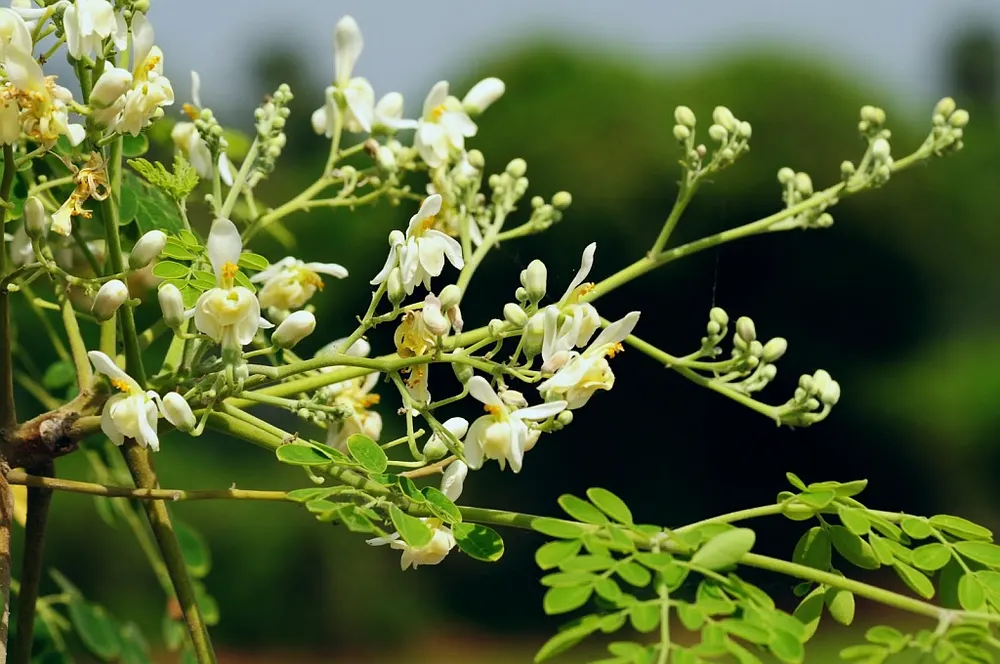
Photo: Venkatx5, CC BY-SA 3.0 (via Wikimedia Commons)
Moringa
Moringa oleifera
Also known as Drumstick Tree, Miracle Tree, Ben Oil Tree, Never Die Tree, Horseradish Tree
Key benefits
✦Traditional uses
✦For centuries, moringa has been a kitchen staple and household remedy across India, Africa, and Southeast Asia, where nearly every part of the tree, from leaf to pod to seed, found its way into daily life. Ayurvedic tradition drew on the leaves and pods as a general tonic for vitality and resilience, prized especially by families who needed a dependable source of nourishment through lean, dry seasons. In many African communities, the tree earned the nickname "never die" for its ability to keep producing leaves through drought, which made it a trusted, humble ally rather than a rare or exotic cure. Traditionally, nursing mothers turned to moringa leaf to help support milk supply, a use still widely practiced today.
How to grow & use it
✦The full apothecary for Moringa
Traditional remedies and step-by-step preparations, a complete growing guide, and how to harvest, dry, and store it, all unlocked with HerbLens Unlimited.
- ✦Remedies & preparations
- ✦ Growing guide
- ✦Harvest & storage
From under $6 a month. Free plant identifications always included.
- ✦Ginger
- ✦Lemongrass
- ✦Turmeric
- ✦Nettle
- ✦Spinach
Moringa's long, ridged seed pods look remarkably like drumsticks, which is exactly where its common South Asian name comes from, while farmers across drought-prone parts of Africa call it the "never die tree" because a bare, leafless branch stuck in dry ground will often sprout and grow again.
Moringa leaves and pods are safe in normal amounts, but the root and bark are more concentrated and traditionally avoided, especially during pregnancy. It may enhance the effects of diabetes and blood pressure medications.