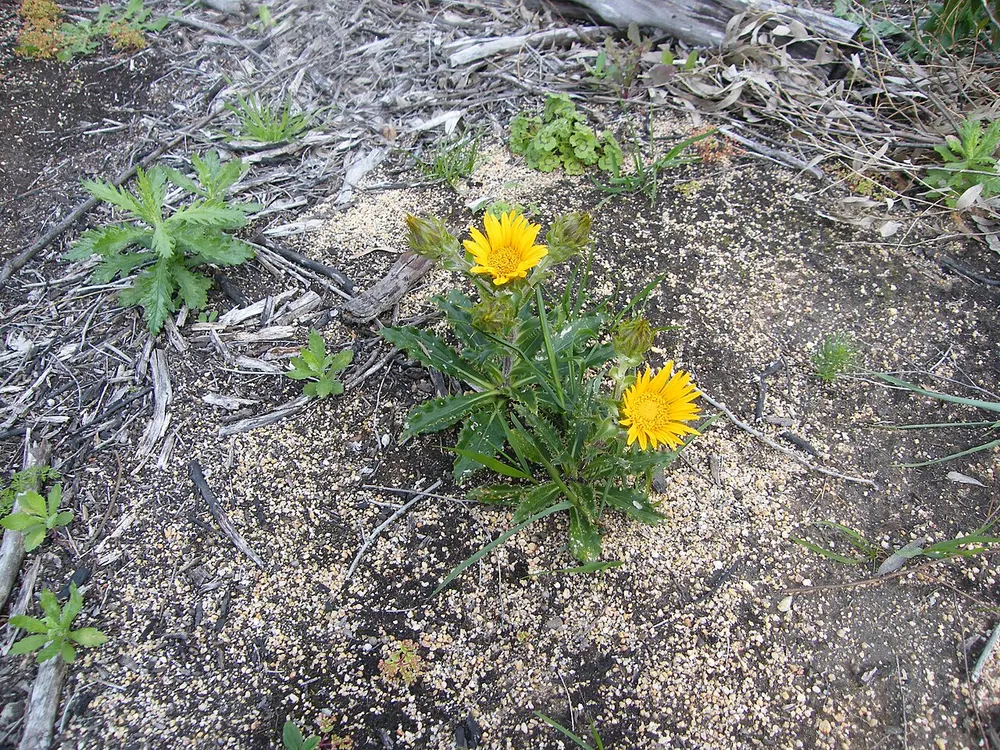
Photo: Andrew massyn, CC BY-SA 3.0 (via Wikimedia Commons)
Dune Thistle
Berkheya armata
Also known as Dune Thistle, Table Mountain Thistle, Silver Berkheya, Duinedissel
Key benefits
✦Traditional uses
✦Berkheya armata comes from the wind-scoured dunes and fynbos of South Africa's Western Cape, where its silvery, deeply cut leaves and fierce spines evolved as armor against grazing animals and salt-laden wind rather than as a plant people turned into medicine. It has long been noticed and admired by those walking the Cape coast for its dramatic, almost metallic sheen and its cheerful, oversized yellow flowerheads that seem at odds with such a thorny frame. Unlike some of its Berkheya relatives that carry a documented place in southern African traditional healing, no reliable historical record credits this particular species with medicinal use, so its story has stayed mostly a horticultural and botanical one. Gardeners eventually carried it out of the dunes and into cultivation, prizing it purely for its sculptural presence rather than any remedy it offered.
How to grow & use it
✦The full apothecary for Dune Thistle
Traditional remedies and step-by-step preparations, a complete growing guide, and how to harvest, dry, and store it, all unlocked with HerbLens Unlimited.
- ✦Remedies & preparations
- ✦ Growing guide
- ✦Harvest & storage
From under $6 a month. Free plant identifications always included.
- ✦Agapanthus
- ✦Restio
- ✦Euphorbia
“For the gardener who wants a plant that looks forged from hammered silver, thorns and all.”
Despite its common name, the dune thistle is not a true thistle at all. It belongs to the daisy tribe Arctotideae, and its thistle-like spines are a case of convergent evolution, a separate lineage arriving at the same prickly defense as true thistles in the Cirsium and Carduus genera.
Berkheya armata has no history of food or medicinal use and is not meant for ingestion. Its rigid spines can cause real puncture wounds, so handle it with thick gloves and keep it away from children and pets.