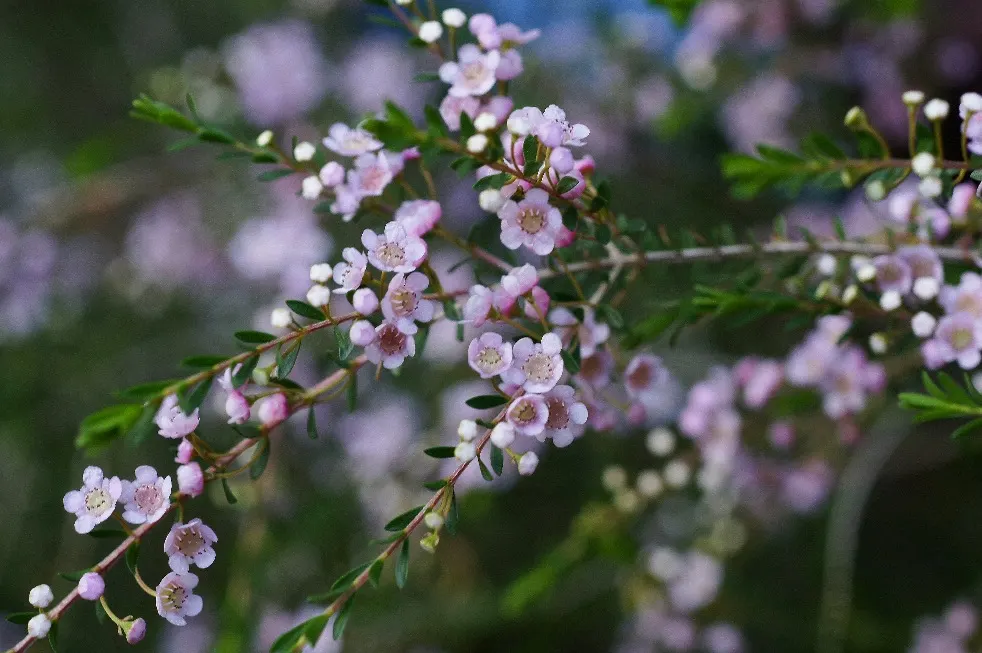
Photo: Tatters ❀ from Brisbane, Australia, CC BY-SA 2.0 (via Wikimedia Commons)
Rock Thryptomene
Thryptomene saxicola
Also known as Rock Thryptomene, Thryptomene, Stirling Range Thryptomene
Key benefits
✦Traditional uses
✦Thryptomene saxicola comes from the rugged, rocky corners of southwestern Australia, where its wiry little branches wedge into stone crevices and its small heath-like leaves release a soft, resinous fragrance when brushed. Its name tells its own story: saxicola simply means rock dweller. For generations it has been treasured less as a medicine and more as a garden and floristry plant, its long sprays of tiny pink or white flowers cut and carried into homes as a cheerful, long-lasting filler through the cooler months. It belongs to the same great myrtle family as eucalyptus and tea tree, though its own traditional record is one of ornament and quiet garden companionship rather than remedy.
How to grow & use it
✦The full apothecary for Rock Thryptomene
Traditional remedies and step-by-step preparations, a complete growing guide, and how to harvest, dry, and store it, all unlocked with HerbLens Unlimited.
- ✦Remedies & preparations
- ✦ Growing guide
- ✦Harvest & storage
From under $6 a month. Free plant identifications always included.
- ✦Eucalyptus foliage
- ✦Waxflower (Chamelaucium)
- ✦Tea tree (Leptospermum) sprigs
- ✦Waxflower (Chamelaucium uncinatum)
- ✦Baby's breath (Gypsophila)
“You want a haze of tiny starry blossoms that asks for almost nothing and gives back months of bloom.”
Thryptomene saxicola and its garden hybrids became such a fixture of Australian winter floristry that growers nicknamed one popular cultivated form Payne's Hybrid, named for the nursery that first popularized its especially generous sprays of bloom.
Rock Thryptomene is grown as an ornamental and cut flower rather than eaten, so treat it as a non-food, non-medicinal plant.