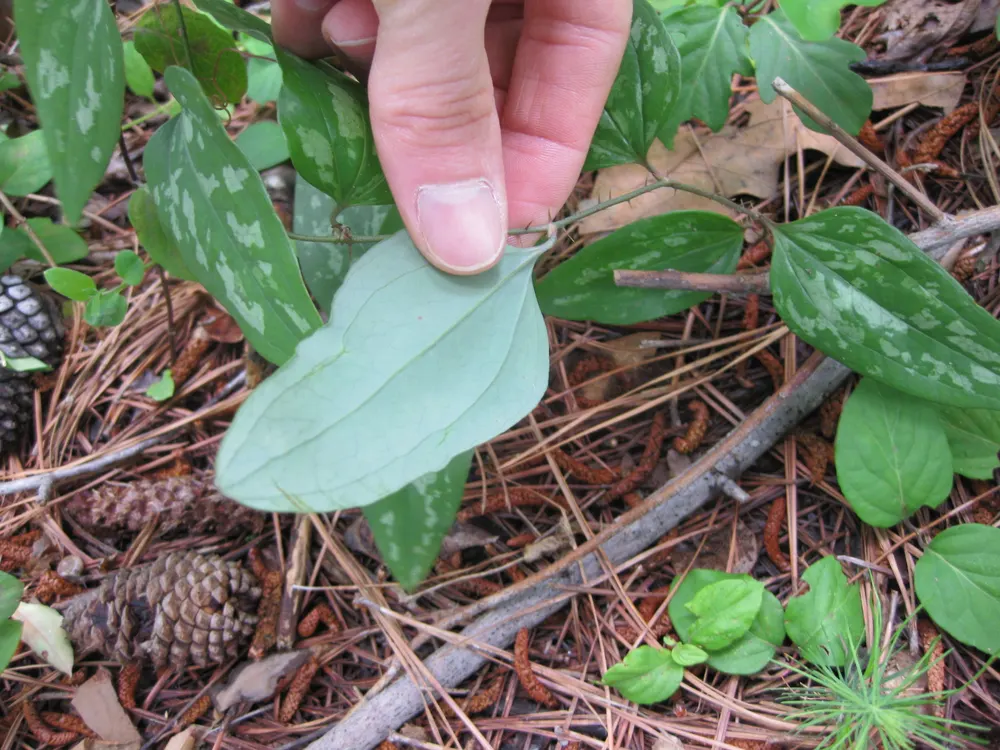
Photo: Fepup, Public domain (via Wikimedia Commons)
Sawbrier
Smilax glauca
Also known as Cat Brier, Glaucous Greenbrier, Wild Sarsaparilla Vine, Sawbrier Root
Key benefits
✦Traditional uses
✦Long before it was ever pressed into a modern tincture, sawbrier's tangled roots were dug by Native American communities and rural Appalachian and Southern households alike, valued as a starchy food source and a spring tonic root. The rhizomes were pounded, soaked, and strained to release a reddish starch that was dried into a meal or simmered into a jelly, a practical food in lean seasons. Herbalists of the region also steeped the root as a traditional blood purifying tonic and used washes made from it on troubled skin, much as other native Smilax species were used across the South. The tender young shoots, harvested in spring while still soft, were traditionally cooked and eaten much like asparagus.
How to grow & use it
✦The full apothecary for Sawbrier
Traditional remedies and step-by-step preparations, a complete growing guide, and how to harvest, dry, and store it, all unlocked with HerbLens Unlimited.
- ✦Remedies & preparations
- ✦ Growing guide
- ✦Harvest & storage
From under $6 a month. Free plant identifications always included.
- ✦Sassafras
- ✦Burdock root
- ✦Yellow dock
- ✦Smilax officinalis (true sarsaparilla root)
- ✦Burdock root
“For the thicket forager who wants a root with real pioneer history in hand.”
Sawbrier's genus name Smilax comes from Greek myth, tied to the story of a nymph transformed into a thorny vine, a fitting origin for a plant that snags every passerby with its recurved prickles.
Sawbrier is not known to be toxic, but its sharp recurved thorns can scratch skin while foraging, so wear gloves. Confirm identification carefully, since it resembles other Smilax species and thorny vines.