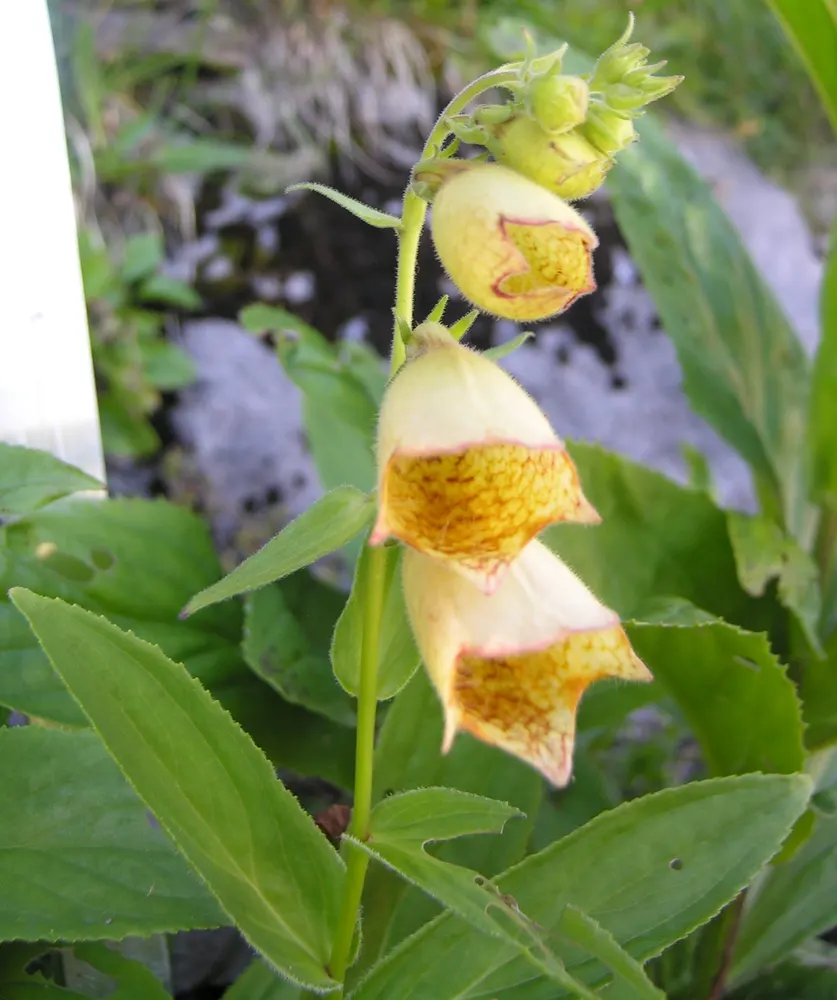
Photo: Audrius Meskauskas (Audriusa), CC BY-SA 3.0 (via Wikimedia Commons)
Yellow Foxglove
Digitalis grandiflora
Also known as Large Yellow Foxglove, Perennial Foxglove, Big-Flowered Foxglove
Key benefits
✦Traditional uses
✦Digitalis grandiflora belongs to the same storied genus that gave the world one of medicine's most important heart drugs. Its cousin, common foxglove, entered Western medical history in 1785 when the English physician William Withering traced a folk remedy for dropsy back to a Shropshire healer's herbal mixture and identified foxglove as the active ingredient, eventually leading to modern digoxin. Yellow foxglove has long been grown in cottage and woodland gardens for its gentler, more graceful color, prized as an ornamental rather than gathered as a household herb. Its story is really a caution wrapped in beauty, a reminder that some of our most powerful medicines began as plants far too dangerous to use without exact laboratory measurement.
How to grow & use it
✦The full apothecary for Yellow Foxglove
Traditional remedies and step-by-step preparations, a complete growing guide, and how to harvest, dry, and store it, all unlocked with HerbLens Unlimited.
- ✦Remedies & preparations
- ✦ Growing guide
- ✦Harvest & storage
From under $6 a month. Free plant identifications always included.
- ✦Delphinium
- ✦Astilbe
- ✦Old garden roses
- ✦Verbascum (mullein) for a similar tall spire in yellow
- ✦Lupine for vertical color without the toxicity concerns
“For the gardener who wants tall gold spires nodding at the back of a shaded border, admired at arm's length and kept well away from curious little hands and paws.”
William Withering's landmark 1785 book on foxglove, An Account of the Foxglove, grew directly out of a family recipe he learned from an old Shropshire woman who had been quietly treating dropsy with it for years, making yellow foxglove's more famous purple cousin one of the rare folk remedies that walked straight into the modern pharmacy.
Every part of Digitalis grandiflora contains cardiac glycosides (cardenolides) that are dangerously toxic if eaten, including the leaves, flowers, seeds, and even the water in a vase that has held cut stems. Ingestion can cause nausea, vomiting, blurred or yellow-tinged vision, irregular heartbeat, and in serious cases death, and the plant is equally toxic to dogs, cats, horses, and livestock. People taking heart medications such as digoxin, diuretics, or other cardiac drugs are at particular risk, since this plant is the botanical relative of the drugs themselves. Handling the foliage can also irritate sensitive skin, so gloves are wise when planting or dividing it. This is a look-only, admire-from-a-distance garden plant, never a home remedy. If you suspect any part has been eaten, treat it as a medical emergency and contact Poison Control or a doctor immediately, and always garden with children and pets in mind when choosing where to plant it.