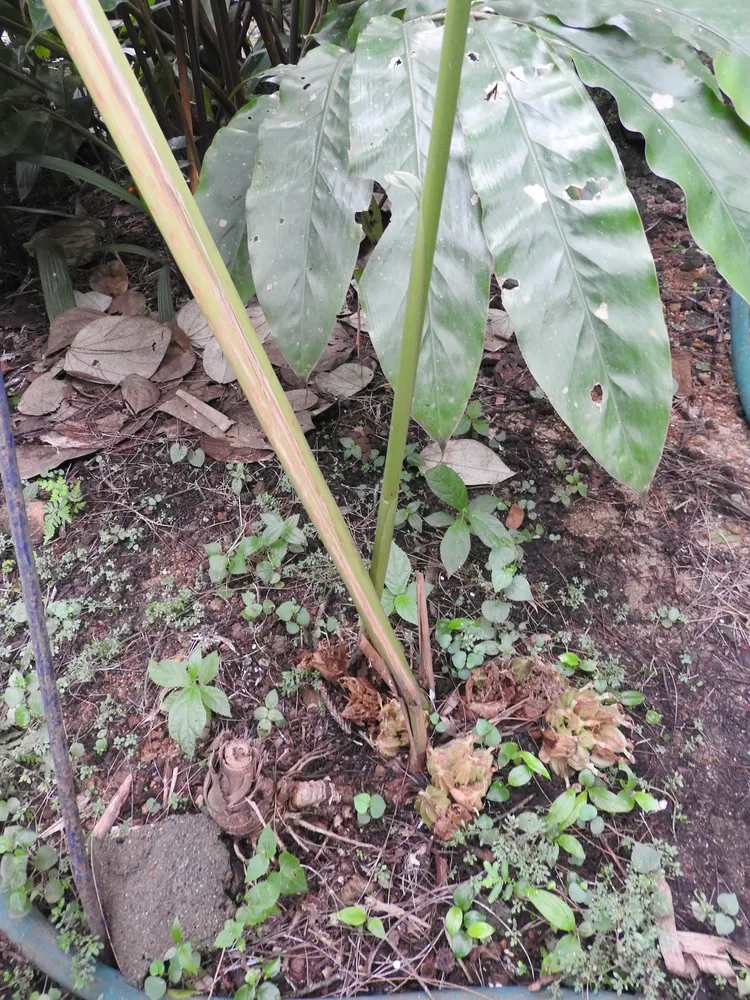
Photo: Yercaud-elango, CC BY-SA 4.0 (via Wikimedia Commons)
Wild Cardamom
Amomum maximum
Also known as Java Amomum, Large Wild Ginger, Forest Cardamom
Key benefits
✦Traditional uses
✦Amomum maximum is one of the great sprawling family of wild gingers that fills the forest floors of South and Southeast Asia, a close cousin of the cardamom and tsaoko pods long prized in regional kitchens and traditional medicine chests alike. In the villages that grow up alongside these forests, the ripe seed pods have traditionally been gathered, dried, and either cooked whole into stews and curries or steeped for a warming after-meal drink meant to settle a heavy stomach. Because it shares its aromatic, oil-rich seeds with better documented relatives like Amomum tsaoko and Amomum villosum, folk use of this plant has followed a similar path, valued as a household spice first and a gentle digestive comfort second. Much of what is known about this particular species still comes from regional botanical and culinary tradition rather than formal study, so it is best approached with curiosity and appropriate humility.
How to grow & use it
✦The full apothecary for Wild Cardamom
Traditional remedies and step-by-step preparations, a complete growing guide, and how to harvest, dry, and store it, all unlocked with HerbLens Unlimited.
- ✦Remedies & preparations
- ✦ Growing guide
- ✦Harvest & storage
From under $6 a month. Free plant identifications always included.
- ✦Ginger
- ✦Star anise
- ✦Turmeric
- ✦Black cardamom
- ✦Green cardamom
“For the warm, resinous hush of a forest floor, bottled in a single fragrant pod.”
The species name maximum nods to its stature. Amomum maximum grows far larger than the compact cardamom plants of the spice trade, sometimes towering over the foragers who come looking for its low-hidden flowers and pods.
This wild cardamom is not known to be toxic, but wild ginger-family plants have look-alikes, so only eat it with confident identification.