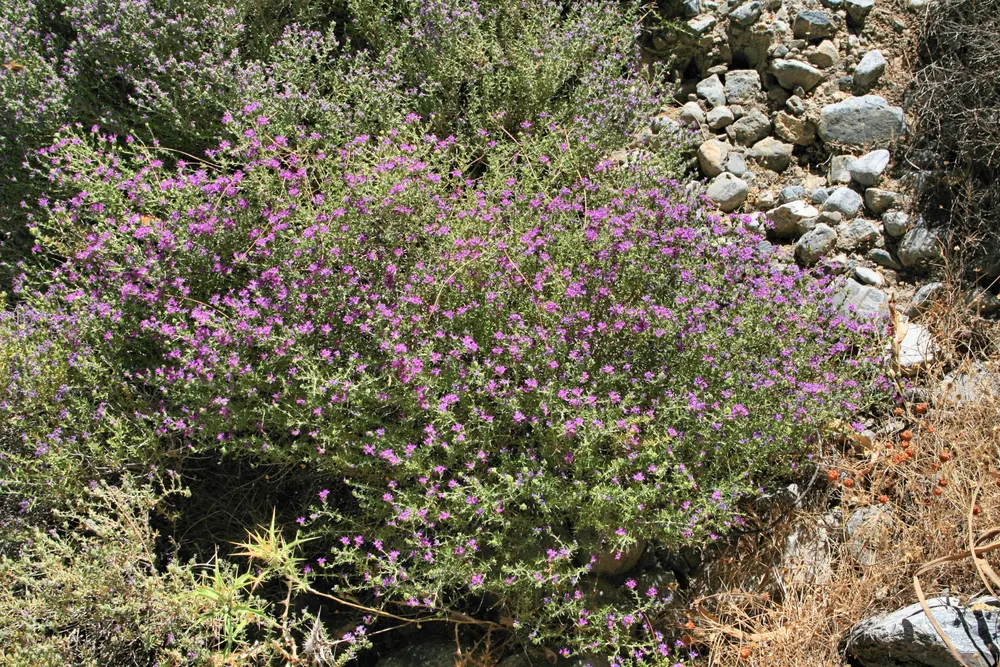
Photo: Lapplaender, CC BY-SA 3.0 de (via Wikimedia Commons)
Conehead Thyme
Thymbra capitata
Also known as Spanish Oregano, Cretan Thyme, Headed Thyme, Coridothymus capitatus
Key benefits
✦Traditional uses
✦Long before it had a tidy botanical name, this scrubby little shrub was already perfuming the hillsides of Crete, Spain, and the Greek islands, where shepherds and cooks alike knew it simply as the wild thyme underfoot. In Spain it is so central to the kitchen that it is sold in markets as oregano, even though it belongs to an entirely different genus than true oregano, a mix-up that has lasted centuries because the flavor is so similar and so good. Coastal communities have long steeped the leaves and flowering tops into warming teas after meals, and the plant's intensely aromatic oil made it a natural companion to preserved foods and heavier winter cooking, where its sharp, warming bite was thought to help the body along. It is also, quietly, one of the most important honey plants in the Mediterranean, its nectar prized above nearly all others.
How to grow & use it
✦The full apothecary for Conehead Thyme
Traditional remedies and step-by-step preparations, a complete growing guide, and how to harvest, dry, and store it, all unlocked with HerbLens Unlimited.
- ✦Remedies & preparations
- ✦ Growing guide
- ✦Harvest & storage
From under $6 a month. Free plant identifications always included.
- ✦Rosemary
- ✦Oregano
- ✦Sage
- ✦Common thyme
- ✦Oregano
“You want the sharp, sun-warmed bite of the wild Mediterranean hillside in a single leaf.”
This unassuming shrub is the main nectar source for much of Crete's famous wild thyme honey, and bees will travel remarkable distances across sun-scorched hillsides just to reach its flowers.
Undiluted essential oil is strong enough to irritate the skin, mouth, and stomach, so it should never be taken internally. Anyone sensitive to the mint family should use it with caution. Ordinary culinary use of the dried leaf, as is traditional across the Mediterranean, is fine.