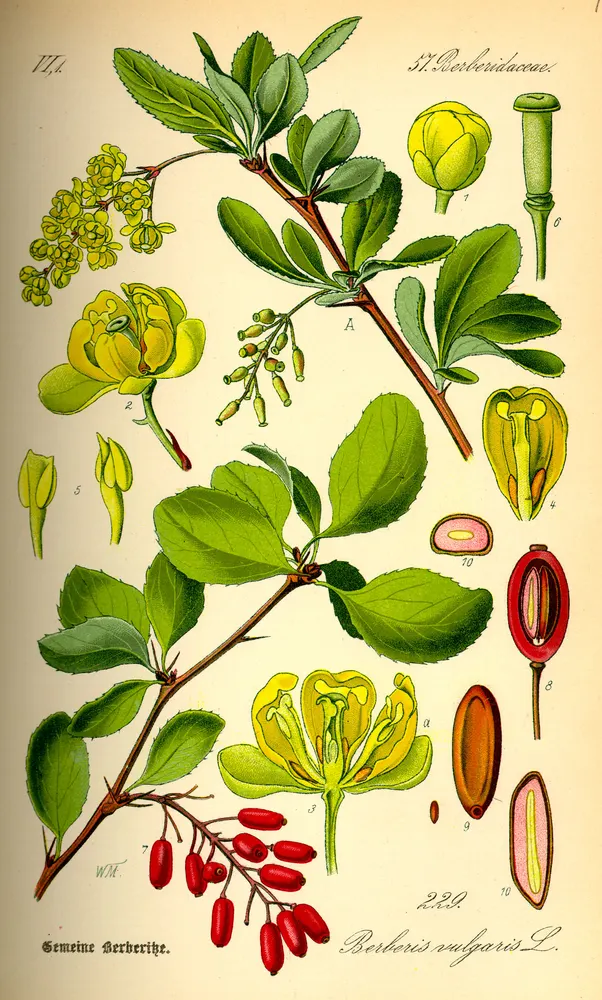
Photo: Public domain (via Wikimedia Commons)
Barberry
Berberis vulgaris
Also known as European Barberry, Common Barberry, Pipperidge Bush, Zereshk (dried berry)
Key benefits
✦Traditional uses
✦For centuries, European hedgerows were dotted with barberry bushes whose scarlet berries were gathered each autumn for preserves, cordials, and sharp little jams that cut through rich winter food. In Persian kitchens the dried berries became zereshk, the ruby flecks studding zereshk polo, prized as much for their tang as for the old belief that a sour fruit helped a heavy meal settle. European folk herbalists also turned to barberry, particularly its bright yellow root bark, as a classic bitter, traditionally used to stir a sluggish appetite and support the liver the way dandelion root or gentian might. It is a plant that has always lived a double life, part pantry staple, part apothecary shelf.
Growing guide
✦Fresh to dried
✦Traditional preparations
✦Tart Barberry Infusion
A ruby-colored, pleasantly sour tea made from the ripe dried berries, traditionally sipped after a rich meal the way one might reach for a squeeze of lemon or a spoonful of chutney.
How it's made. Traditionally, a tea is made by steeping 1 teaspoon of dried ripe barberries, lightly crushed, in 250 ml of just-boiled water for 8 to 10 minutes, then strained and enjoyed warm.
- ✦Hibiscus
- ✦Rosehip
- ✦Dandelion root
- ✦Rosehip
- ✦Hibiscus
“For the hedgerow tang of an autumn preserve, sharp, bright, and rimmed in old garden lore.”
Because barberry can host wheat stem rust, a fungus that once devastated American wheat harvests, entire government-led eradication campaigns in the early twentieth century paid farmers to dig it up, and planting it is still restricted in several U.S. states today.
Unripe berries, bark, and root contain berberine, which is toxic in quantity and can cause vomiting or low blood pressure. It should be avoided in pregnancy, breastfeeding, and in infants (linked to newborn jaundice), and it can interact with blood thinners, blood pressure drugs, and diabetes medication. Only fully ripe berries are suitable for everyday culinary use.