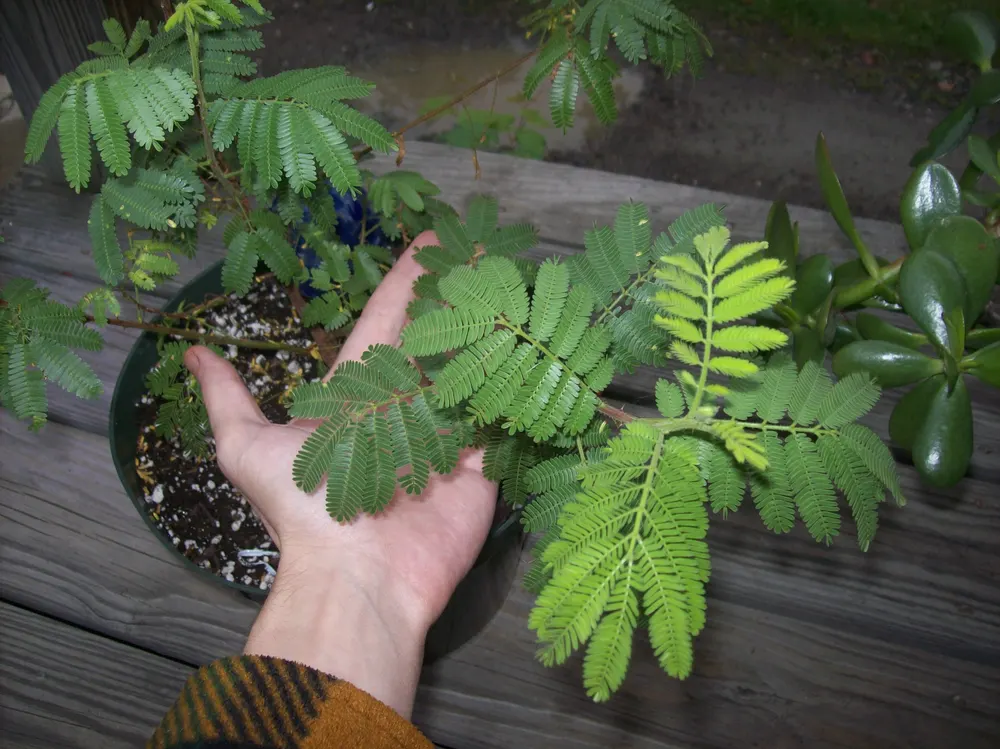
Photo: Drewpiter, CC BY 2.0 (via Wikimedia Commons)
Jurema Preta (Tepezcohuite)
Mimosa hostilis
Also known as Tepezcohuite, Black Jurema, Skin Tree, Vinho de Jurema (as a ceremonial preparation), Mimosa tenuiflora (accepted synonym)
Key benefits
✦Traditional uses
✦In Mexico, the powdered inner bark of this tree earned the name tepezcohuite, or 'skin tree,' after healers used it for generations to dress burns, cuts, and stubborn wounds, a practice that drew wide attention when it was used to treat survivors of the devastating 1984 gas explosion and 1985 earthquake in Mexico City. Farther south, in the dry caatinga of Brazil, the same tree carries an entirely different weight of history: its root bark is central to Jurema, a sacred plant and ceremonial tradition kept alive by Indigenous peoples such as the Kariri and Potiguara and later woven into Afro-Brazilian religious practice. Because the root bark contains a powerful psychoactive compound, that ceremonial use has always belonged to trained ritual specialists working within careful cultural protocols, never to casual or solitary use. This entry focuses on the tree's well-documented external, traditional skin care history rather than that sacred and legally restricted use.
How to grow & use it
✦The full apothecary for Jurema Preta (Tepezcohuite)
Traditional remedies and step-by-step preparations, a complete growing guide, and how to harvest, dry, and store it, all unlocked with HerbLens Unlimited.
- ✦Remedies & preparations
- ✦ Growing guide
- ✦Harvest & storage
From under $6 a month. Free plant identifications always included.
- ✦Aloe vera (traditional topical skin care)
- ✦Calendula (traditional topical skin care)
- ✦Comfrey
- ✦Aloe vera
“The bark that mends burned skin, and the root that carries the oldest songs.”
After the catastrophic 1984 San Juan Ixhuatepec gas explosions near Mexico City, burn units reported unusually good results treating patients with tepezcohuite bark powder, and the tree's reputation as 'the skin tree' spread internationally almost overnight.
This plant's root bark contains dimethyltryptamine (DMT), a potent psychoactive compound, and any preparation made for internal, ceremonial, or recreational use is a serious matter: DMT is a controlled substance in the United States and many other countries, its effects are powerful and unpredictable, and it can be dangerous when combined with other substances, certain medications (especially MAOIs and antidepressants), or in anyone with a personal or family history of mental health conditions, heart problems, or during pregnancy or breastfeeding. Traditional ceremonial use of the root bark exists, but it belongs to trained Indigenous and Afro-Brazilian ritual specialists working within specific cultural and legal frameworks, not to casual self-experimentation. The tree's thorns are also sharp enough to cause puncture wounds. For any use whatsoever of this plant, especially anything involving the root bark, please consult a qualified healthcare professional and know your local laws first.