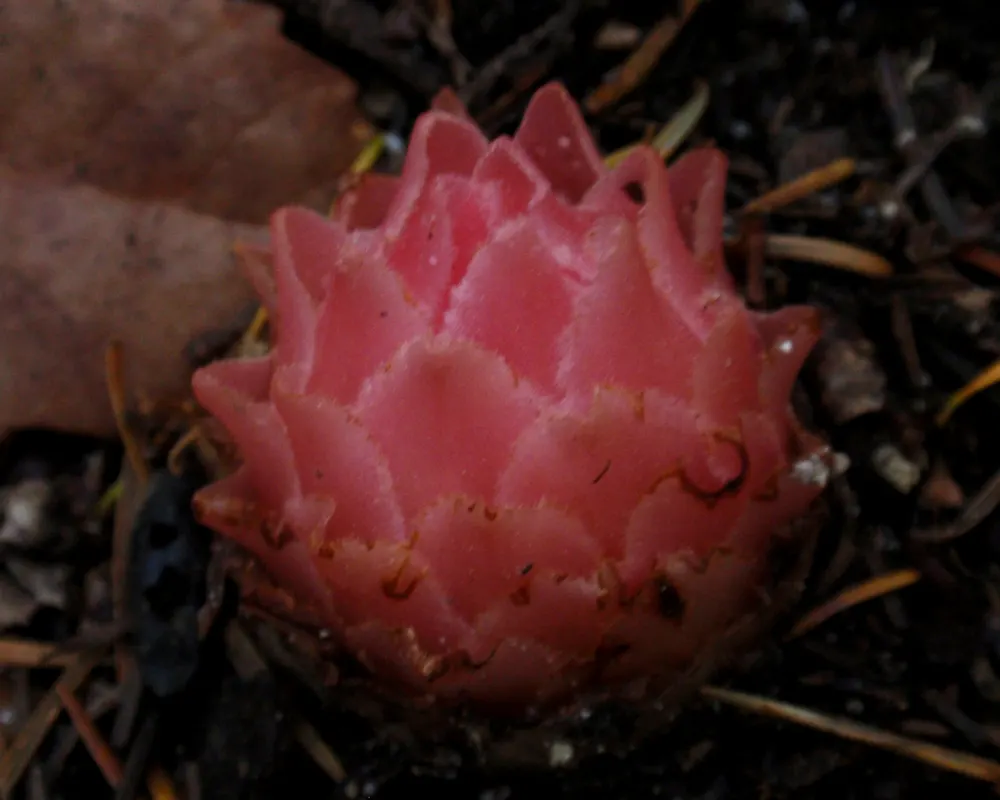
Photo: Tom Hilton, CC BY 2.0 (via Wikimedia Commons)
Fringed Pinesap
Pleuricospora fimbriolata
Also known as Fringed Pinesap, Pinefoot
Key benefits
✦Traditional uses
✦Fringed pinesap has no known tradition of use in food, medicine, or craft that has been recorded in ethnobotanical literature. Unlike most of the plants in this atlas, it was never a bundle in an apothecary's drying rack or a leaf steeped for tea, and honesty matters more than invention here. Its real story is a botanical one: it belongs to a small, strange fellowship of forest plants that gave up making their own food long ago, surviving instead by tapping into the underground fungal threads that also feed the surrounding pines and firs. Finding one is less a harvest than a small privilege, a glimpse of a forest relationship that mostly happens out of sight.
How to grow & use it
✦The full apothecary for Fringed Pinesap
Traditional remedies and step-by-step preparations, a complete growing guide, and how to harvest, dry, and store it, all unlocked with HerbLens Unlimited.
- ✦Remedies & preparations
- ✦ Growing guide
- ✦Harvest & storage
From under $6 a month. Free plant identifications always included.
“For the moment you kneel in old forest duff and realize something pale and otherworldly has been growing there all along, needing no sun at all.”
Fringed pinesap has no green in it at all, not even a hint, because it makes no chlorophyll and never photosynthesizes a single day of its life. Instead it plugs into mycorrhizal fungi already threaded through the roots of nearby pines and firs, quietly siphoning sugars the trees worked to make, a plant living entirely on borrowed sunlight.
Fringed pinesap has no history of food or medicine use and should not be eaten. It depends entirely on a fungal partnership to survive, so picking or digging it kills the plant, so it is best enjoyed where it grows.