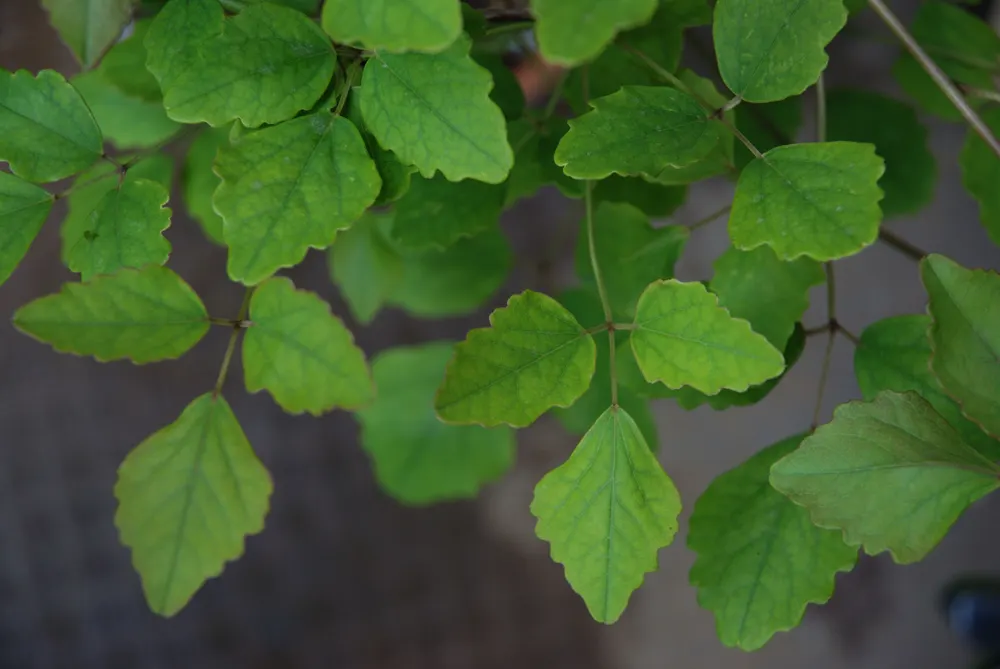
Photo: by monado, CC BY-SA 2.5 (via Wikimedia Commons)
Three-Leaf Akebia
Akebia trifoliata
Also known as Chocolate Vine, Akebi, Sausage Vine, Mu Tong (traditional Chinese stem name)
Key benefits
✦Traditional uses
✦Long before it reached Western gardens as an ornamental curiosity, Akebia trifoliata was quietly feeding and doctoring households across China, Japan, and Korea. Its pale purple pods, splitting open in early autumn to reveal a sweet, tapioca-like pulp, were gathered as a seasonal treat, eaten out of hand the way a child might eat a persimmon straight off the tree. The woody vine stem, dried and cut into slices, entered the Chinese herbal tradition under the name Mu Tong, where it was steeped as part of formulas meant to clear heat, encourage urination, and, in folk practice, help nursing mothers along. Even the young spring leaves found their way into the pot, simmered as a mild, faintly bitter potherb in lean months. It is a plant that earned its keep in three different ways before anyone thought to plant it just for its looks.
How to grow & use it
✦The full apothecary for Three-Leaf Akebia
Traditional remedies and step-by-step preparations, a complete growing guide, and how to harvest, dry, and store it, all unlocked with HerbLens Unlimited.
- ✦Remedies & preparations
- ✦ Growing guide
- ✦Harvest & storage
From under $6 a month. Free plant identifications always included.
- ✦Plantain leaf
- ✦Dandelion leaf
- ✦Corn silk
- ✦Plantain leaf
- ✦Corn silk
“For a fragrant spring curtain of blossom and an old-fashioned autumn treat that splits itself open to invite you in.”
The vine's chocolate-scented flowers give it its common name, but its fruit is the real surprise: a soft purple pod that splits open on its own when ripe, revealing pale, glossy pulp that tastes something like a cross between banana and passionfruit, seeds and all.
Traditional herbal use of this plant carries one caution worth knowing well: the dried vine stem, sold in Asian herbal markets under the name Mu Tong, has a documented history of being confused with or substituted by toxic Aristolochia species sold under similar market names. Those Aristolochia plants contain aristolochic acid, a potent kidney toxin and known carcinogen, and this substitution was directly linked to serious cases of kidney failure in the 1990s when adulterated products reached consumers abroad. Genuine Akebia stem itself is not the source of that danger, but because the mix-up has happened at the supply-chain level, any dried Mu Tong or Akebia stem product should be bought only from a source that can verify the true botanical species, never assumed safe by name alone. The ripe fresh fruit, eaten as food, does not carry this risk. Pregnant or nursing individuals, and anyone with kidney concerns or on prescription diuretics, should avoid concentrated stem preparations altogether. As always, speak with a qualified healthcare provider or herbalist before using this or any plant medicinally, especially in stem or extract form.