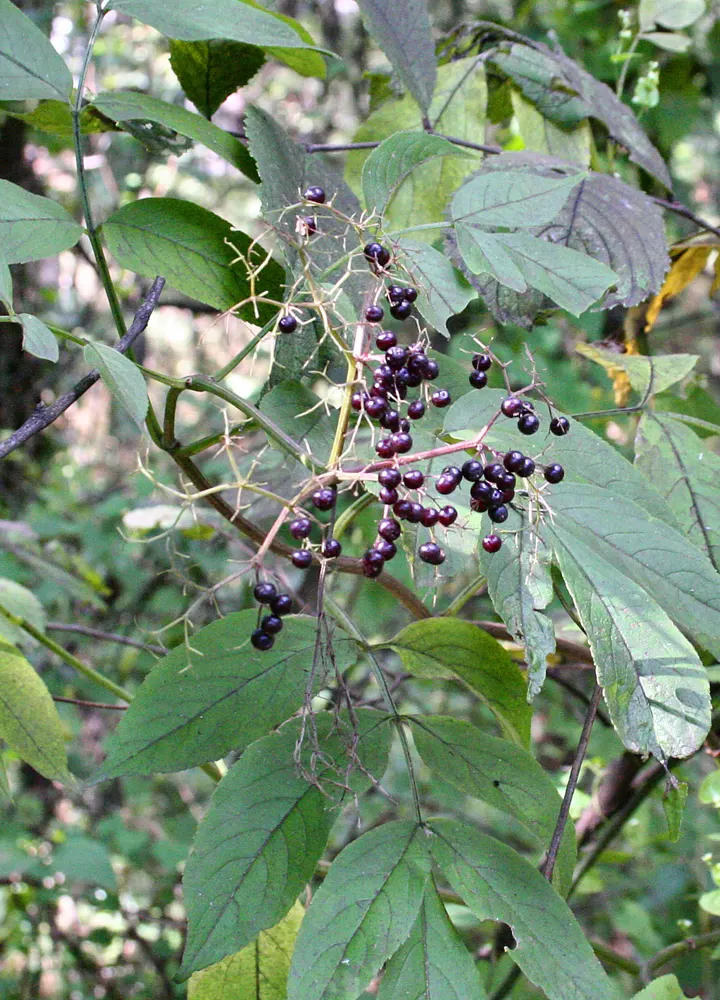
Photo: CC BY 2.5 (via Wikimedia Commons)
Elderberry
Sambucus canadensis
Also known as American Elder, Common Elder, Sweet Elder, Elderblow
Key benefits
✦Traditional uses
✦Elderberry has been woven into folk medicine on both sides of the Atlantic for centuries. European tradition held the elder tree as a protective, almost sacred plant, one you asked permission of before cutting, and its flowers and berries were steeped into remedies for cold and flu season long before refrigeration or pharmacies existed. Indigenous peoples of eastern North America used the native Sambucus canadensis in their own right, working the flowers, bark, and berries into washes and infusions passed down through generations. By the time elderberry syrup became a pantry staple in health food stores, it was already carrying centuries of grandmothers' wisdom behind it.
How to grow & use it
✦The full apothecary for Elderberry
Traditional remedies and step-by-step preparations, a complete growing guide, and how to harvest, dry, and store it, all unlocked with HerbLens Unlimited.
- ✦Remedies & preparations
- ✦ Growing guide
- ✦Harvest & storage
From under $6 a month. Free plant identifications always included.
- ✦Yarrow
- ✦Peppermint
- ✦Echinacea
- ✦Rosehips
- ✦Chamomile
“When the first chill of the season creeps in and you reach for the dark, folk-trusted berries of late summer.”
The word elder is thought to come from the Anglo-Saxon word aeld, meaning fire, because children once hollowed out the pithy young stems to blow air and coax a flame back to life.
Raw or unripe berries, along with the leaves, bark, roots, and seeds, can cause nausea and vomiting, so only fully ripe cooked berries and dried flowers are used. Its immune-stimulating reputation means it's traditionally avoided alongside autoimmune conditions or immune-suppressing medication, and used cautiously in pregnancy.