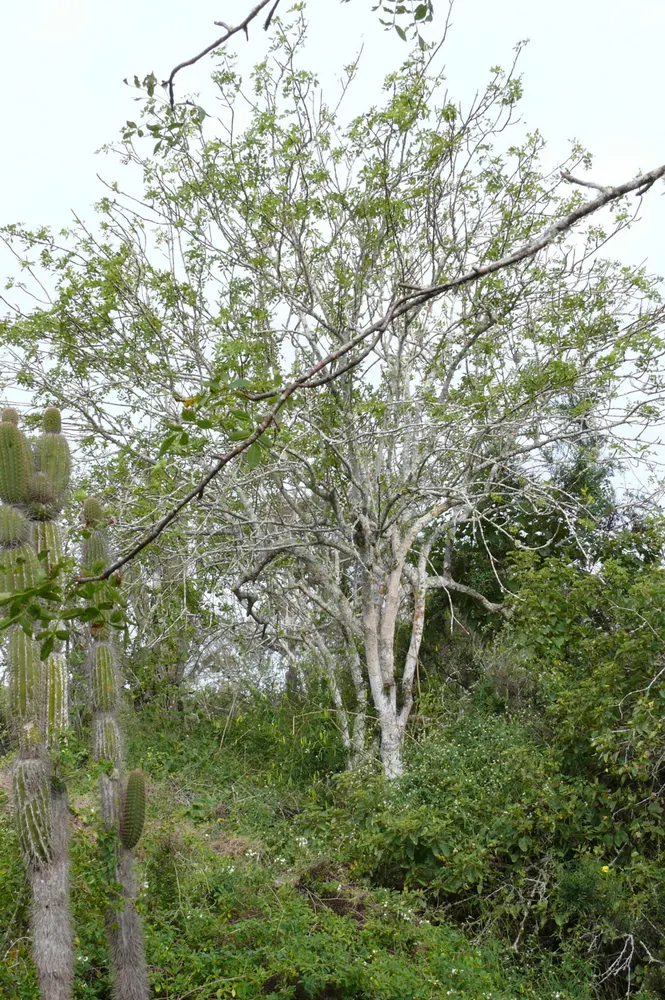
Photo: Haplochromis, CC BY-SA 3.0 (via Wikimedia Commons)
Palo Santo
Bursera graveolens
Also known as Holy Wood, Sacred Wood, Incienso
Key benefits
✦Traditional uses
✦Along the dry coastal forests of Ecuador and Peru, palo santo, whose name simply means holy wood, has been burned for generations to clear the air of a home, mark the close of a ceremony, and settle a restless mind before sleep. Indigenous and mestizo communities alike have long tucked the smoldering sticks near doorways and gathering places, both for its warm, resinous scent and for its traditional reputation as a natural insect deterrent. Spanish missionaries recorded local use of the wood and resin for easing minor aches, and that same warm, citrusy smoke is still gathered into households and healing spaces across South America today. Its cousin trees in the frankincense and myrrh family share this same story of resin turned into ritual, but palo santo's is distinctly tied to the dry Pacific coast it calls home.
How to grow & use it
✦The full apothecary for Palo Santo
Traditional remedies and step-by-step preparations, a complete growing guide, and how to harvest, dry, and store it, all unlocked with HerbLens Unlimited.
- ✦Remedies & preparations
- ✦ Growing guide
- ✦Harvest & storage
From under $6 a month. Free plant identifications always included.
- ✦White Sage
- ✦Frankincense
- ✦Copal
- ✦Frankincense (Boswellia)
- ✦Copal resin
“When the air feels heavy and the room, or the mind, could use a little clearing.”
Palo santo wood is never cut from a living tree. Harvesters wait for a tree to die and fall on its own, then leave the wood resting on the forest floor for four to ten years while the sap slowly concentrates into the fragrant, resinous heartwood prized for burning.
Palo santo oil is for diluted external use only; undiluted oil can irritate skin, and it isn't meant to be taken internally. The smoke can irritate the airways of people with asthma or respiratory sensitivities, so burn it in a ventilated space and keep it away from children and pets.