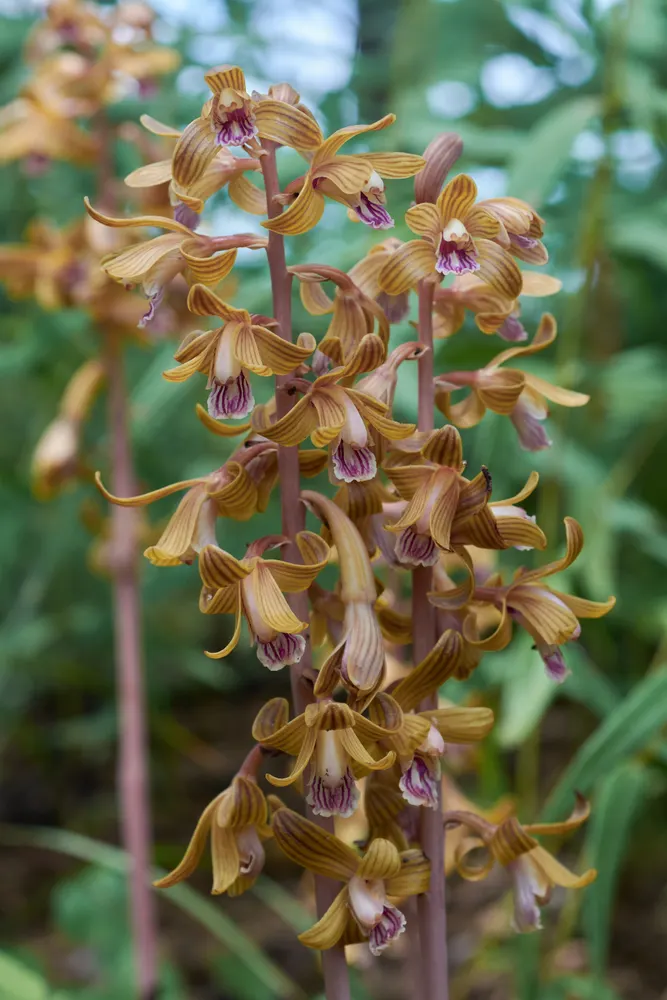
Photo: Eric Hunt, CC BY-SA 4.0 (via Wikimedia Commons)
Crested Coralroot
Hexalectris spicata
Also known as Spiked Crested Coralroot, Cockscomb Coralroot
Traditional uses
✦Crested coralroot is one of the true oddities of the eastern and southwestern woodlands, a ghostly orchid with no green in it at all, no leaves, and no chlorophyll to speak of. It survives entirely by tapping into underground fungal networks that also feed nearby oaks and pines, a trick that has fascinated botanists far more than it ever fed into folk medicine cabinets. Unlike its cousins in the Corallorhiza genus, which do show up here and there in older herbal notes, no reliable record of traditional medicinal use for Hexalectris spicata has survived, and none should be invented. Its real legacy is as a marvel of the forest floor, a reminder that not every remarkable plant is a remedy.
How to grow & use it
✦The full apothecary for Crested Coralroot
Traditional remedies and step-by-step preparations, a complete growing guide, and how to harvest, dry, and store it, all unlocked with HerbLens Unlimited.
- ✦Remedies & preparations
- ✦ Growing guide
- ✦Harvest & storage
From under $6 a month. Free plant identifications always included.
“For the rare, hushed thrill of finding something on the forest floor that the woods only show once in a great while.”
Crested coralroot has no chlorophyll whatsoever. It survives by quietly siphoning sugars from nearby oak or pine trees through a shared underground fungal network, a lifestyle botanists call myco-heterotrophy, essentially living as a plant that eats like a mushroom.
This leafless orchid has no food or herbal use and depends on a fungal partner to survive, so digging or picking it kills it outright. It's rare or protected across much of its range, so it's best left undisturbed in the wild.