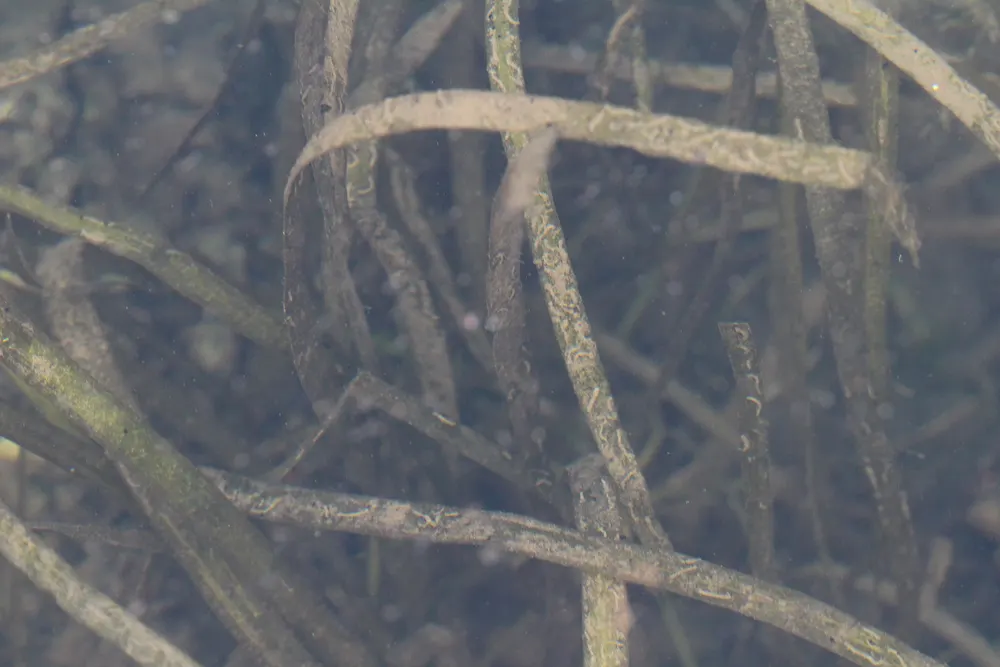
Photo: Samuel A Schmid, CC BY 4.0 (via Wikimedia Commons)
Wild Celery (American Eelgrass)
Vallisneria americana
Also known as American eelgrass, Tape grass, Water celery, Vallisneria
Key benefits
✦Traditional uses
✦Vallisneria americana has almost no history as a human medicine, but it holds a real place in North American natural history and foodways all the same. Its ribbon leaves and starchy winter buds once fed vast rafts of migrating canvasback ducks so heavily that the birds' rich, nutty flavor became legendary on Chesapeake Bay tables, and hunters and cooks of the nineteenth century judged a canvasback's worth by how much wild celery it had eaten. Naturalists and pond keepers have long prized the plant for the same reason ducks do, since a healthy stand of wild celery signals clean water and a thriving underwater world.
How to grow & use it
✦The full apothecary for Wild Celery (American Eelgrass)
Traditional remedies and step-by-step preparations, a complete growing guide, and how to harvest, dry, and store it, all unlocked with HerbLens Unlimited.
- ✦Remedies & preparations
- ✦ Growing guide
- ✦Harvest & storage
From under $6 a month. Free plant identifications always included.
- ✦Water lilies
- ✦Hornwort
- ✦Anacharis (Elodea)
- ✦Vallisneria spiralis (Italian vallisneria)
- ✦Dwarf sagittaria
“For the gardener building a living pond, not a medicine chest.”
The canvasback duck, once considered the finest-eating waterfowl in North America, owed its prized flavor almost entirely to a diet heavy in wild celery tubers, and nineteenth-century hunters would judge a bird's quality by how thick its coat of eelgrass-fed fat had grown.
Wild celery is not known to be toxic and is not eaten or brewed as tea; in some regions outside its native range it can spread aggressively in ponds, so check local guidance before introducing it.