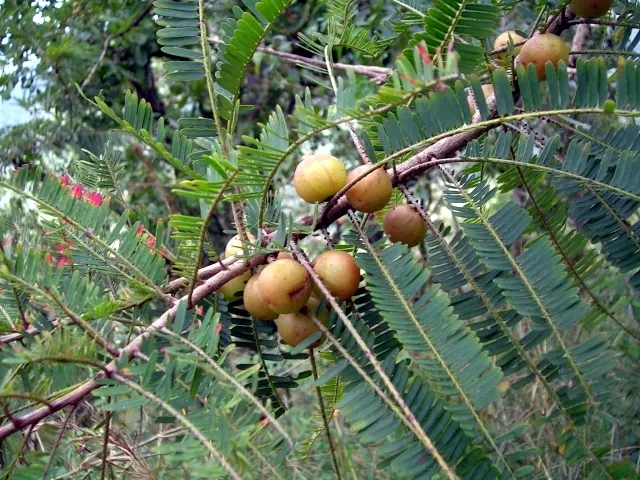
Photo: L. Shyamal, CC BY 2.5 (via Wikimedia Commons)
Amla (Indian Gooseberry)
Phyllanthus emblica
Also known as Amla, Amalaki, Indian Gooseberry, Nellikai, Aonla
Key benefits
✦Traditional uses
✦Amla holds one of the most honored places in Ayurvedic medicine, where it is considered a rasayana, a substance believed to slow aging and restore vitality to the whole body. It stands as one of the three fruits in Triphala, the ancient digestive formula still taken across South Asia today. Village healers and grandmothers alike have long turned to the tart little fruit for sluggish digestion, low vitality, and as a general tonic through the changing seasons. Its sourness was prized long before science explained why, valued simply as a sign of strength and cleansing power.
Growing guide
✦Fresh to dried
✦Traditional preparations
✦Amla Morning Tonic
A simple, traditional way to take amla, meant to be sipped gently as part of a daily routine rather than as a remedy for any specific ailment.
How it's made. Traditionally, 1 teaspoon of dried amla powder is simmered in 250 ml of water for 5 to 10 minutes, then strained and sipped warm, sometimes with a little honey once cooled.
Amla and Honey Stir
A softer, food-like preparation favored by households that find the tea too tart on its own.
How it's made. Traditionally, 1/2 teaspoon of dried amla powder is stirred into a cup of warm water with a small spoonful of honey and taken in the morning.
- ✦Turmeric
- ✦Ginger
- ✦Licorice Root
- ✦Rose Hips
- ✦Camu Camu
“When you crave a small, sour spark that generations before you turned to for steady, quiet vitality.”
Ayurvedic tradition holds that amla is one of the rare foods to carry five of the six recognized tastes, sour, sweet, bitter, astringent, and pungent, missing only salty, which is why it was long considered such a complete tonic.
Amla is a food generally well tolerated in normal amounts. In concentrated doses it may lower blood sugar or thin the blood, so those on diabetes or blood-thinning medication should be cautious.