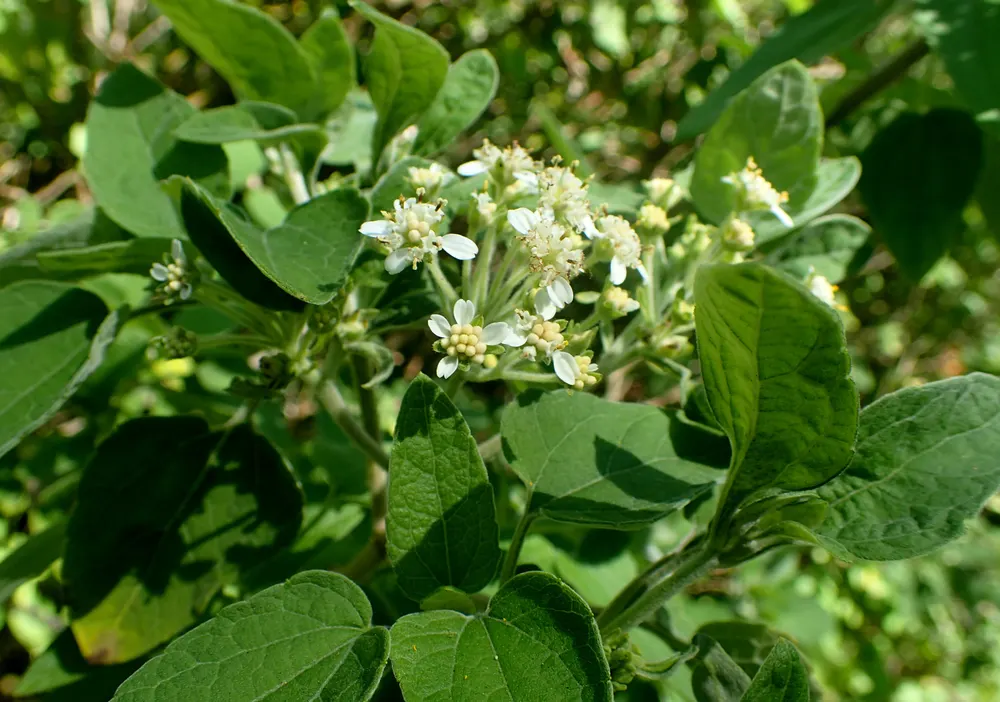
Photo: Krzysztof Ziarnek, Kenraiz, CC BY-SA 4.0 (via Wikimedia Commons)
Zoapatle
Montanoa tomentosa
Also known as Cihuapatli, Zoapatle, Zoapactle, Mexican tree daisy, Cihuapactli
Key benefits
✦Traditional uses
✦In the highlands of central Mexico, healers and midwives have long known this shrub by its Nahuatl name, cihuapatli, meaning roughly woman medicine. For generations it was gathered by traditional birth attendants and steeped into a strong tea used around the time of childbirth, valued for its reputed ability to bring on and strengthen labor. Spanish chroniclers in the sixteenth century, including Francisco Hernandez, recorded its use among Aztec healers, and it remained a fixture of Mexican folk gynecology well into the twentieth century, when it also drew the attention of pharmacologists studying uterine-stimulant plants. Its story is really the story of generations of women's knowledge passed hand to hand, long before any laboratory confirmed what those healers already trusted.
How to grow & use it
✦The full apothecary for Zoapatle
Traditional remedies and step-by-step preparations, a complete growing guide, and how to harvest, dry, and store it, all unlocked with HerbLens Unlimited.
- ✦Remedies & preparations
- ✦ Growing guide
- ✦Harvest & storage
From under $6 a month. Free plant identifications always included.
“A plant that belongs to the story of Mexican midwifery, not to the home tea cabinet.”
The genus Montanoa honors Luis Jose Montana, an eighteenth-century Mexican physician, while the species' common name cihuapatli comes straight from Nahuatl, the Aztec language, a rare case of an indigenous medicinal name surviving essentially unchanged into modern Spanish and Mexican herbal markets.
Montanoa tomentosa is not a gentle kitchen herb. Its leaves and flowers contain kaurenoic acid and related diterpenes with documented oxytocic activity, meaning they can stimulate strong uterine contractions. This is precisely why it was historically used to induce or hasten labor, and it has also served traditionally as an abortifacient, so it must never be used during pregnancy except under the direct, supervised care of a qualified midwife or physician in cultures where that traditional practice continues. It is not appropriate for casual or self-directed use by anyone who is pregnant or may become pregnant, and its effects on other groups, drug interactions, and appropriate dosing have not been well established in modern research. For these reasons no home preparation or dosage is given here. Anyone interested in this plant's traditional or clinical uses should speak with a qualified herbalist, midwife, or physician familiar with its history rather than attempting to use it on their own.