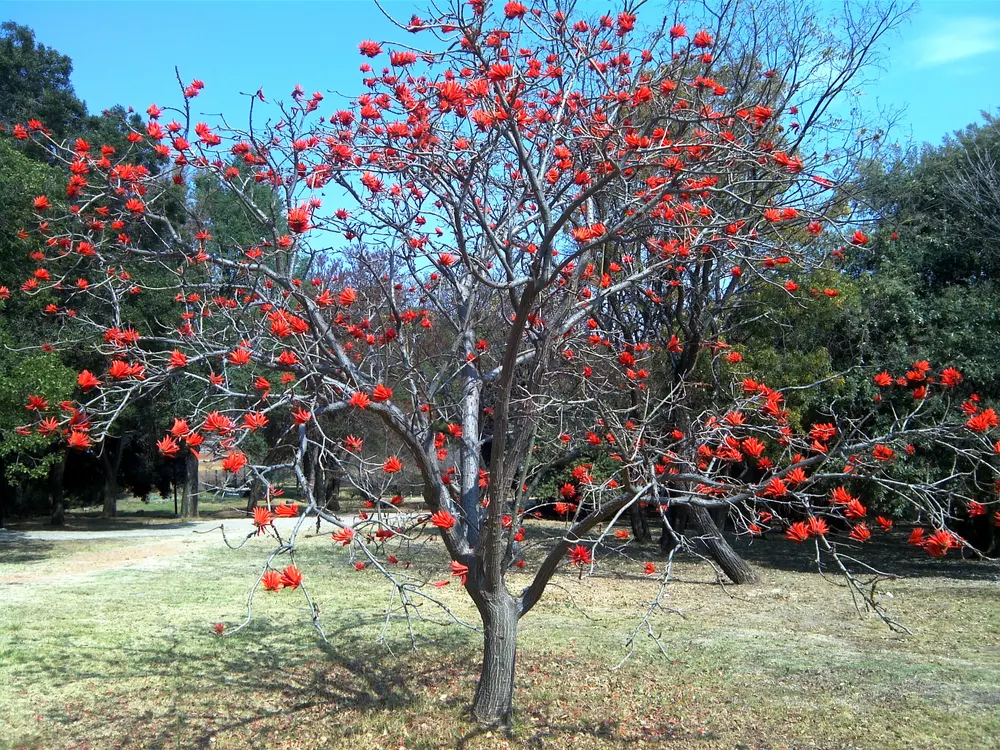
Photo: JMK, CC BY-SA 3.0 (via Wikimedia Commons)
Coral Tree
Erythrina lysistemon
Also known as Common Coral Tree, Lucky Bean Tree, Weeping Coral Tree, umSinsi
Key benefits
✦Traditional uses
✦Long before it was planted as an ornamental street tree, the coral tree held a sacred place in southern African life. Zulu tradition calls it umSinsi and often planted it near homesteads and graves, its blaze of red flowers on bare winter branches read as a sign that the ancestors were near. Healers in the region turned to the bark for a range of complaints, from wounds to toothache and joint pain, and the hard scarlet seeds, known as lucky beans, were strung into jewelry and carried as charms for protection and good fortune. That rich history sits alongside a real caution: the tree's alkaloids mean its traditional bark and seed preparations were the province of trained healers, not something to recreate at home.
How to grow & use it
✦The full apothecary for Coral Tree
Traditional remedies and step-by-step preparations, a complete growing guide, and how to harvest, dry, and store it, all unlocked with HerbLens Unlimited.
- ✦Remedies & preparations
- ✦ Growing guide
- ✦Harvest & storage
From under $6 a month. Free plant identifications always included.
“When the coral tree's bare gray branches suddenly erupt in flame red bloom, it is the surest sign that the African winter is bending toward spring.”
The coral tree's seeds are so hard and glossy that they can pass whole through a bird's digestive tract without breaking down, which is part of how the species spread across the African bushveld long before people began stringing the same scarlet seeds into good luck necklaces.
Erythrina lysistemon is not a plant to ingest at home. Its bright scarlet seeds and its bark contain erythrina alkaloids with curare-like, neuromuscular-blocking action, and chewing or swallowing broken seeds or bark preparations has caused serious poisoning, including muscle weakness and breathing difficulty, in both people and livestock. The whole, uncracked seed used in jewelry is generally considered low risk from casual handling, but it should still be kept away from small children and pets who might bite or crack it open, and any traditional bark or seed preparation belongs strictly in the hands of experienced healers, never attempted from a home kitchen. If ingestion of any part of this tree is suspected, treat it as a medical emergency and seek immediate care from a qualified health professional or poison control service.