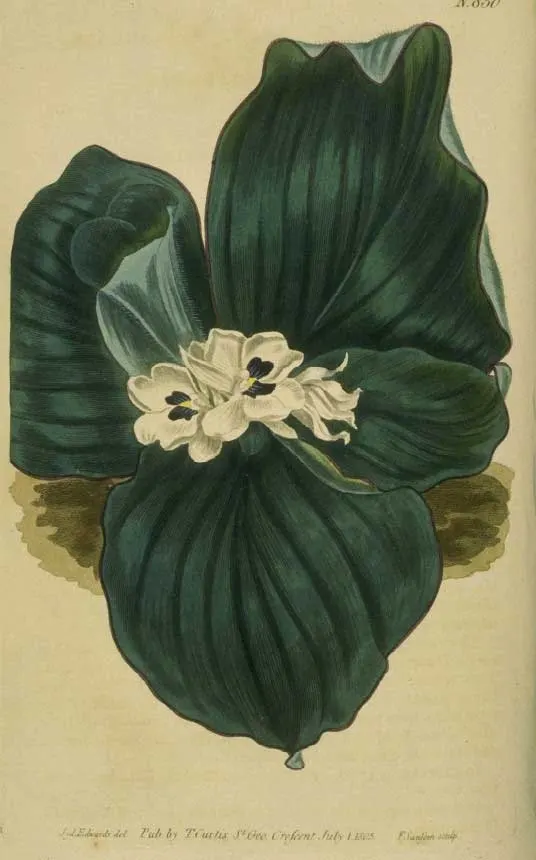
Photo: Public domain (via Wikimedia Commons)
Sand Ginger
Kaempferia galanga
Also known as Kencur, Aromatic Ginger, Cutcherry, Cekur, Shan Nai
Key benefits
✦Traditional uses
✦Long before it traveled with traders and cooks across Southeast Asia, sand ginger's camphor-bright rhizome was already a fixture of village medicine chests from Java to Yunnan. In Indonesian jamu traditions it was pounded fresh with rice and drunk each morning as a tonic for stamina and easy digestion, a preparation still sold today from carts and market stalls under the name beras kencur. Chinese herbalism knew it as shan nai, warming and pungent, traditionally used to settle the stomach, ease coughs, and soothe aching joints and chilblains. Across the region it also found its way into poultices for bruises, swelling, and sore muscles, rubbed straight from the fresh, spicy-sweet rhizome.
How to grow & use it
✦The full apothecary for Sand Ginger
Traditional remedies and step-by-step preparations, a complete growing guide, and how to harvest, dry, and store it, all unlocked with HerbLens Unlimited.
- ✦Remedies & preparations
- ✦ Growing guide
- ✦Harvest & storage
From under $6 a month. Free plant identifications always included.
- ✦Ginger
- ✦Turmeric
- ✦Lemongrass
- ✦Galangal (Alpinia galanga)
- ✦Fresh ginger
“For a whisper of camphor and citrus that says: settle down, breathe easy, and let the stomach rest.”
In Indonesia, sand ginger's most famous role isn't in a medicine cabinet at all, it is the defining flavor of beras kencur, a street-cart tonic so beloved that entire jamu vendors are known simply by the name of this one small, camphor-scented rhizome.
Sand ginger is safe as a culinary spice, though the fresh rhizome is potent and large amounts may irritate the mouth or stomach. It may also interact with sedative or blood-thinning medications, and concentrated extracts are best avoided during pregnancy or breastfeeding due to limited safety research.