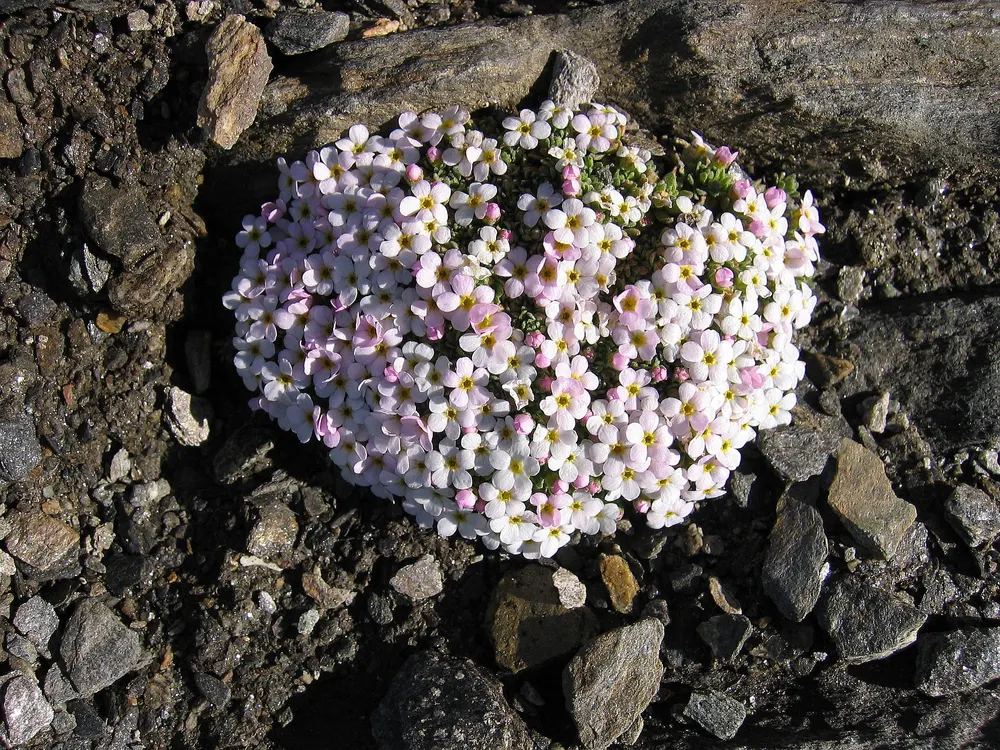
Photo: CC BY-SA 3.0 (via Wikimedia Commons)
Alpine Rock Jasmine
Androsace alpina
Also known as Rock Jasmine, Alpine Androsace
Key benefits
✦Traditional uses
✦Alpine Rock Jasmine has never been a kitchen or medicine cabinet herb. It belongs instead to a different kind of tradition, the long love affair between mountain botanists and the tiny, tenacious plants that cling to life above the treeline. Since the eighteenth century, alpinists and rock gardeners have carried word (and sometimes seed) of this little cushion plant down from the high screes, prizing it for its ability to bloom cheerfully in places almost nothing else will grow. Its story is one of endurance and beauty rather than remedy.
How to grow & use it
✦The full apothecary for Alpine Rock Jasmine
Traditional remedies and step-by-step preparations, a complete growing guide, and how to harvest, dry, and store it, all unlocked with HerbLens Unlimited.
- ✦Remedies & preparations
- ✦ Growing guide
- ✦Harvest & storage
From under $6 a month. Free plant identifications always included.
- ✦Saxifraga
- ✦Sempervivum (houseleek)
- ✦Draba
- ✦Androsace carnea
- ✦Androsace helvetica
“For the gardener who wants a little piece of the high mountains, blooming defiantly where the wind never stops.”
The genus name Androsace comes from the Greek for man and shield, a nod by early botanists to the small round leaves that reminded them of tiny bucklers. Some Androsace species are among the highest-growing flowering plants on earth, found clinging to rock ledges well above 13,000 feet.
Alpine rock jasmine has no history of food or medicinal use and no safety data for ingestion, so treat it as an ornamental only and keep it away from children and pets.