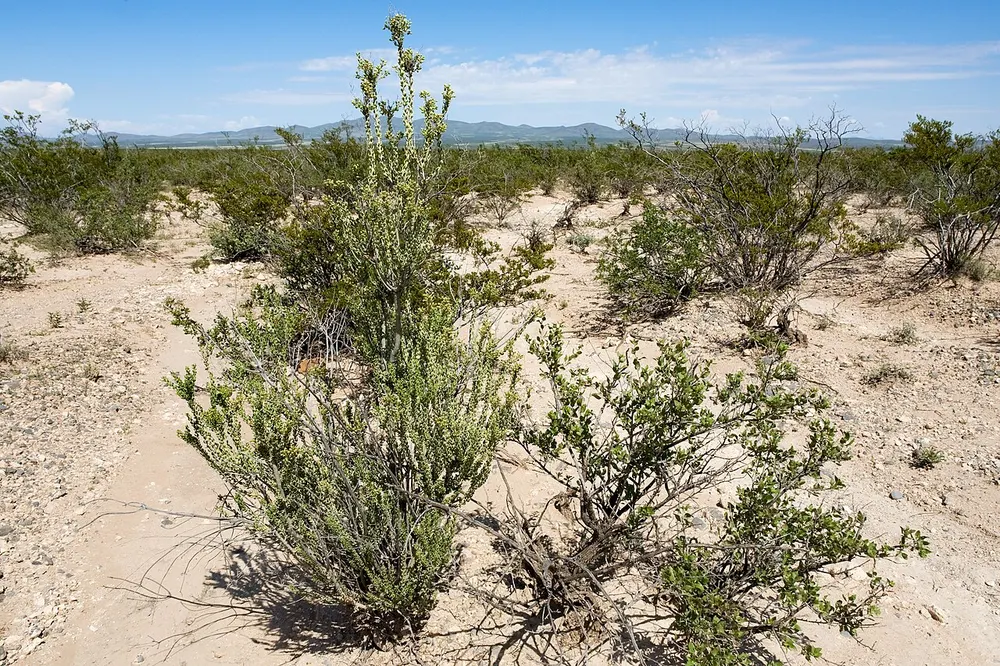
Photo: Patrick Alexander from Las Cruces, NM, CC0 (via Wikimedia Commons)
Rough Mortonia
Mortonia scabrella
Also known as Rough Mortonia, Cliff Mortonia, Mortonia
Key benefits
✦Traditional uses
✦Rough Mortonia is, honestly, more of a botanist's plant than a healer's plant. It does not carry a documented lineage of use among Indigenous or folk herbal traditions the way many desert shrubs do, and no reliable ethnobotanical record credits it with medicinal, culinary, or ceremonial value. Its real story is a quieter one of survival: a tough little evergreen that has spent countless generations figuring out how to hold onto thin, sun-baked limestone soil where almost nothing else will grow. Botanists and desert gardeners have come to value it precisely for that toughness rather than for anything brewed from its leaves.
How to grow & use it
✦The full apothecary for Rough Mortonia
Traditional remedies and step-by-step preparations, a complete growing guide, and how to harvest, dry, and store it, all unlocked with HerbLens Unlimited.
- ✦Remedies & preparations
- ✦ Growing guide
- ✦Harvest & storage
From under $6 a month. Free plant identifications always included.
- ✦Ocotillo
- ✦Agave
- ✦Sotol
- ✦Littleleaf sumac
- ✦Cenizo (Texas sage)
“For the patch of stony, sun-scorched ground where nothing else will settle in and stay green.”
The genus Mortonia contains only about ten species, nearly all confined to limestone country in the American Southwest and Mexico, which makes Rough Mortonia something of a specialist even among tough desert shrubs, most of its cousins simply cannot manage the thin, alkaline soil it calls home.
No meaningful record of use or toxicity exists for rough mortonia, so it is best simply enjoyed as a landscape plant rather than eaten or brewed.