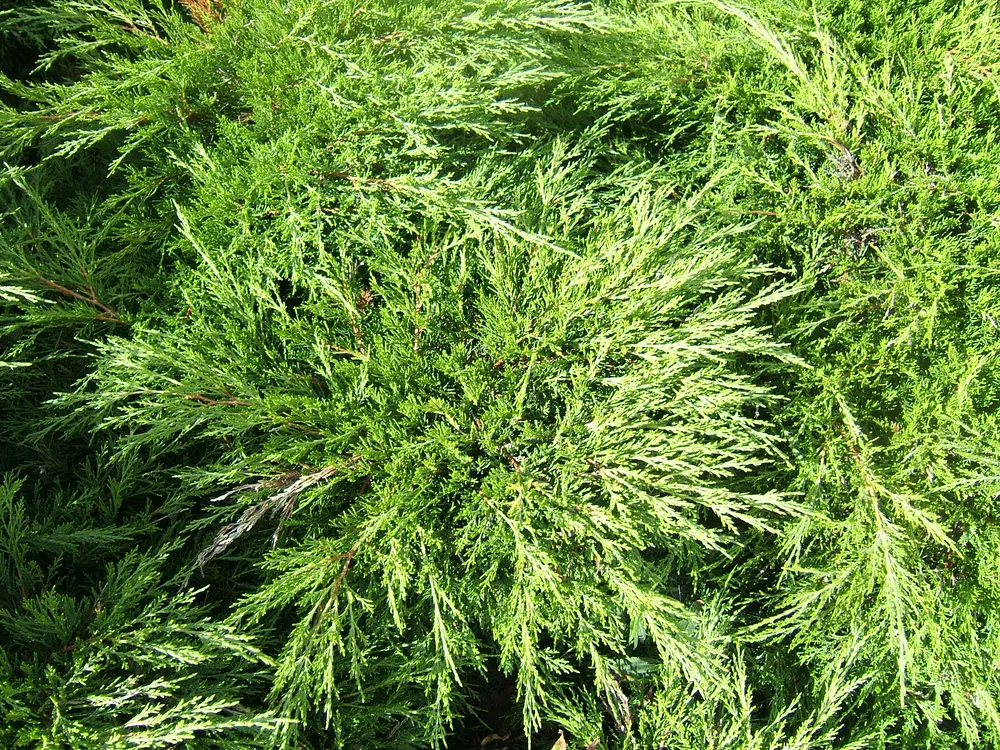
Photo: MPF, CC BY 2.5 (via Wikimedia Commons)
Savin Juniper
Juniperus sabina
Also known as Savin, Sabina, Savin Bush
Key benefits
✦Traditional uses
✦Savin juniper carries one of the more sobering histories in the herbal record. For generations its pungent oil was reached for as a folk abortifacient, a use so widespread and so often fatal that physicians of the 1700s and 1800s wrote case after case warning patients and midwives away from it, and it earned a grim reputation long before modern toxicology could explain why. Crushed foliage was also once rubbed into wounds as a rough antiseptic and used in old veterinary practice against parasites, but these uses faded as the same toxic compound that made the plant effective also made it unpredictable and unsafe. What has endured instead is its garden life: a tough, low, needle-textured evergreen that shrugs off poor soil, drought, and neglect, planted today for its form rather than any use inside the home.
How to grow & use it
✦The full apothecary for Savin Juniper
Traditional remedies and step-by-step preparations, a complete growing guide, and how to harvest, dry, and store it, all unlocked with HerbLens Unlimited.
- ✦Remedies & preparations
- ✦ Growing guide
- ✦Harvest & storage
From under $6 a month. Free plant identifications always included.
“For a rugged evergreen to skirt a rocky bank, not for the medicine cabinet.”
Savin juniper is an alternate host for cedar-apple rust and related rust fungi that also attack apple, pear, and hawthorn trees, which is one reason old orchardists steered well clear of planting it nearby, a quieter kind of trouble than the one it's more famous for.
Savin juniper is genuinely dangerous and is not a plant for home remedies. Every part of it, and especially its essential oil, contains sabinyl acetate, a compound so toxic that the oil was once infamous as a folk abortifacient, a use that caused violent vomiting, seizures, kidney and liver damage, and documented deaths throughout the 18th and 19th centuries before physicians campaigned against it. It is unsafe in any internal dose, unsafe applied to broken or irritated skin, and unsafe during pregnancy, and even modest amounts of foliage have poisoned and killed livestock and pets who browsed on it. There is no safe traditional preparation of this plant to pass along. Enjoy it strictly as a garden ornamental, keep it well out of reach of children and grazing animals, and always consult a qualified healthcare professional before using any herb medicinally.