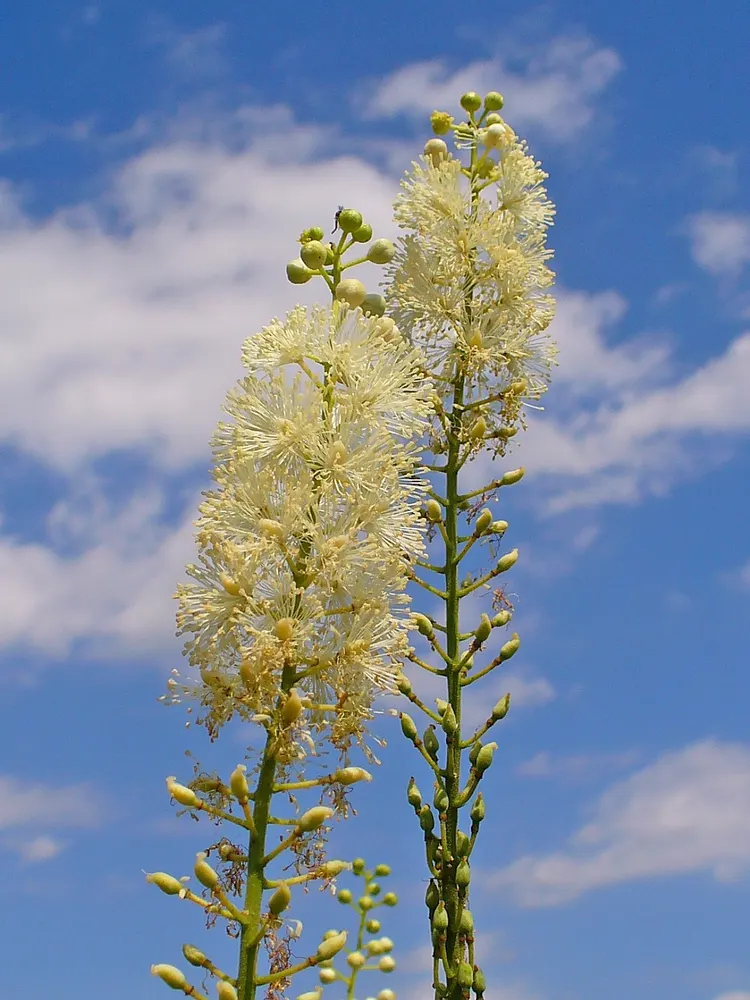
Photo: H. Zell, CC BY-SA 3.0 (via Wikimedia Commons)
Black Cohosh
Actaea racemosa
Also known as Black Snakeroot, Bugbane, Rattleweed, Fairy Candle, Cimicifuga
Key benefits
✦Traditional uses
✦Long before it became a fixture of the natural menopause aisle, black cohosh grew quietly in the understory of eastern hardwood forests, where Cherokee, Iroquois, and other Eastern Woodland peoples dug its gnarled black root for women's health, sore muscles, and general malaise. Nineteenth century Eclectic physicians adopted it eagerly, and by the twentieth century it had crossed the Atlantic, becoming one of Germany's most trusted traditional remedies for the changes of midlife. Herbalists have traditionally reached for it to ease the restlessness, warmth, and moodiness that can accompany the passage out of the childbearing years, treating it almost like a companion for that particular season of a woman's life.
Growing guide
✦Fresh to dried
✦Traditional preparations
✦Traditional Root Decoction
A gentle, old-fashioned way herbalists have traditionally prepared the tough root, simmering rather than steeping, to draw out its qualities.
How it's made. Traditionally, a decoction is made by simmering 1/2 teaspoon of dried, chopped black cohosh root in 1 cup of water for 15 to 20 minutes, then straining. This is generally taken in small amounts, such as a few tablespoons, rather than a full cup.
- ✦Red raspberry leaf
- ✦Motherwort
- ✦Chaste tree (vitex)
- ✦Dong quai
- ✦Sage
“For the long, warm evenings when the body feels unsettled and a season of change is asking to be met gently.”
The name cohosh comes from an Algonquian word meaning rough or knobby, a nod to the root's gnarled, almost knuckled appearance, while bugbane recalls the old belief that its heavy scented flower spikes helped keep insects away from the cabin door.
Black cohosh should be avoided during pregnancy and breastfeeding, since it has traditionally been linked to stimulating uterine activity. Rare but serious liver injury has been reported with its use, so avoid it if you have liver disease and stop immediately if you notice yellowing skin, dark urine, or abdominal pain. Use caution if you have a hormone-sensitive condition such as breast cancer, since its hormonal effects are not fully settled.