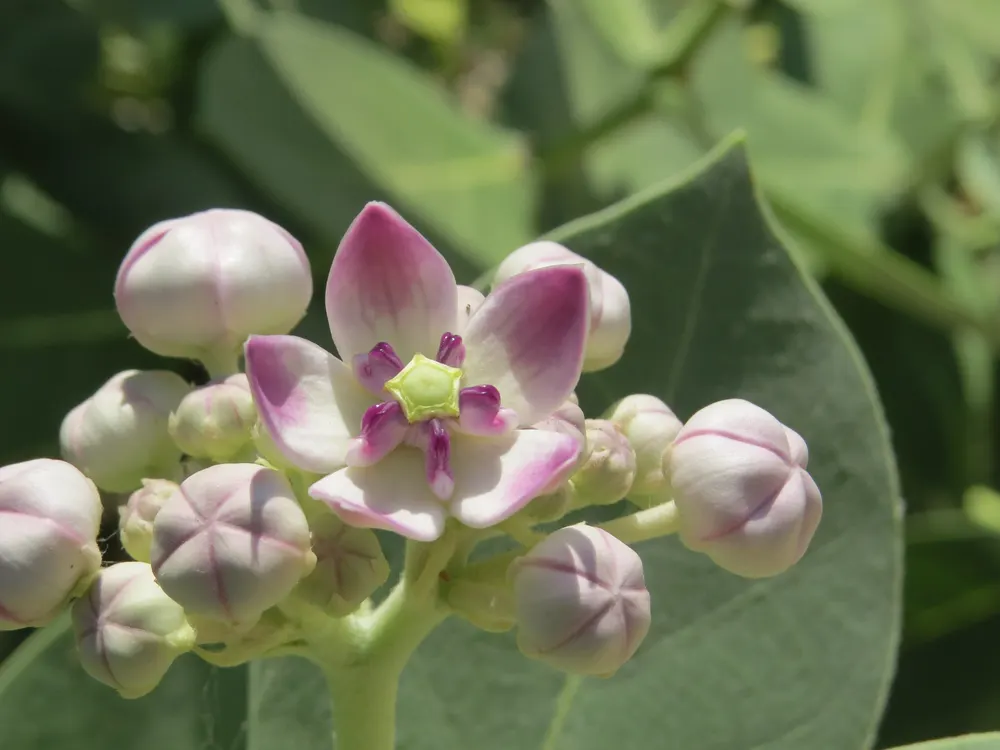
Photo: Vinayaraj, CC BY-SA 4.0 (via Wikimedia Commons)
Sodom's Apple
Calotropis procera
Also known as Apple of Sodom, Calotrope, Giant Milkweed, Rubber Bush, Dead Sea Apple
Key benefits
✦Traditional uses
✦Across the deserts and dry plains of Africa, Arabia, and South Asia, Calotropis procera grew up alongside people as a plant both feared and put to use. Healers in traditional Ayurvedic, Unani, and various African folk systems reached for its milky latex, bark, and root in small, carefully handled external applications for skin troubles, toothache, and swelling, always aware that the same sap could blister the hands that gathered it. Its floss-filled seed pods were pulled apart for tinder, pillow stuffing, and rough cordage, and its tough latex was experimented with as an early source of natural rubber. It earned the name Sodom's apple from travelers who found its handsome fruit hollow and full of bitter fluff inside, a fitting emblem for a plant that looks far gentler than it behaves.
How to grow & use it
✦The full apothecary for Sodom's Apple
Traditional remedies and step-by-step preparations, a complete growing guide, and how to harvest, dry, and store it, all unlocked with HerbLens Unlimited.
- ✦Remedies & preparations
- ✦ Growing guide
- ✦Harvest & storage
From under $6 a month. Free plant identifications always included.
- ✦Calendula (for traditional skin-soothing folk use)
- ✦Plantain leaf (for traditional minor-wound folk use)
“For admiring at a distance along a dusty roadside, never for the teacup.”
The seed pods split open to release hundreds of seeds, each attached to a tuft of silky white floss so fine that it was once tested as a substitute for kapok and cotton in stuffing and insulation, a strange soft treasure hidden inside one of the desert's most dangerous fruits.
Calotropis procera is toxic and should not be ingested in any form. Every part of the plant, especially the milky latex, contains potent cardiac glycosides (including calotropin and calactin) similar in action to digitalis, along with other irritant compounds. Ingestion has caused severe gastrointestinal distress, cardiac disturbances, and has been fatal in both humans and livestock. The latex is intensely caustic on contact, it can cause painful blistering and dermatitis on skin, and contact with the eyes has caused corneal damage and permanent vision loss in documented cases. It should never be used near children or pets, and should be avoided entirely during pregnancy and breastfeeding. There are no established safe internal doses, and it is not recommended for home remedy use of any kind. If accidental exposure or ingestion occurs, contact a poison control center or emergency medical services immediately, and consult a qualified healthcare professional or toxicologist rather than attempting any home treatment.