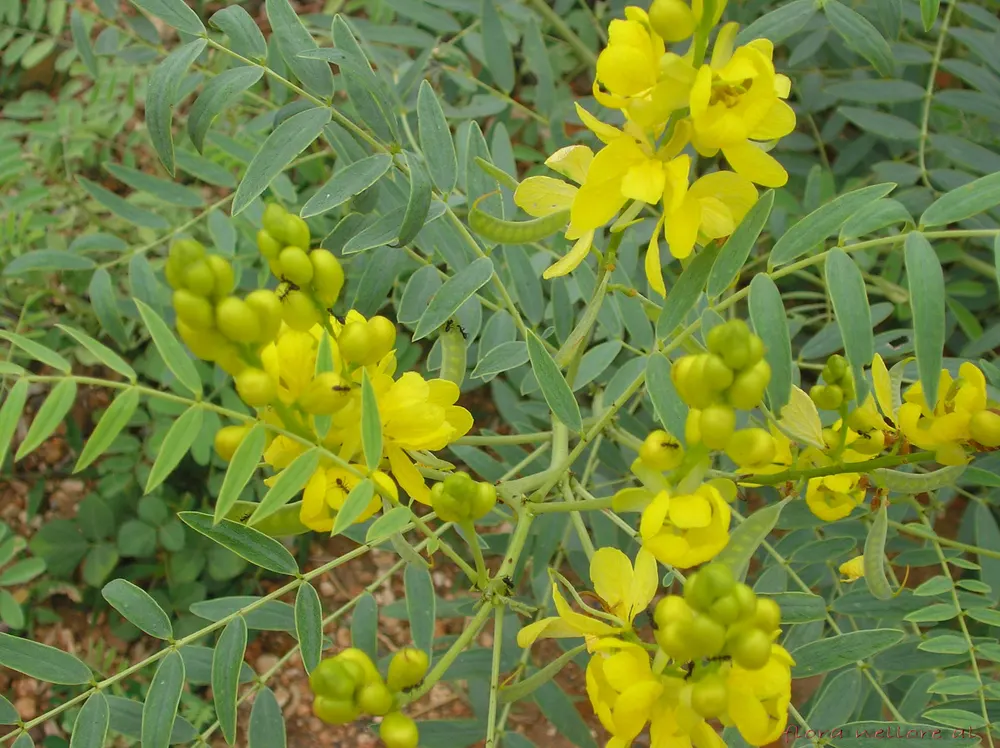
Photo: Lalithamba from India, CC BY 2.0 (via Wikimedia Commons)
Senna
Cassia angustifolia
Also known as Indian Senna, Alexandrian Senna, Tinnevelly Senna, Sanaya
Key benefits
✦Traditional uses
✦Senna has been a trusted household remedy for sluggish digestion for well over a thousand years, carried along Arab trade routes from the Red Sea coast into the medicine chests of Persia, India, and eventually Europe. Arab physicians of the ninth and tenth centuries, including the great al-Razi, wrote of its reliable effect on the bowels, and the name itself comes from the Arabic sana. In traditional practice, the dried leaflets and pods were steeped into a mild tea and reserved for occasional, short-term use rather than everyday drinking, a distinction herbalists still honor today. It remains one of the most widely recognized plant-based laxatives in both folk and modern medicine cabinets.
How to grow & use it
✦The full apothecary for Senna
Traditional remedies and step-by-step preparations, a complete growing guide, and how to harvest, dry, and store it, all unlocked with HerbLens Unlimited.
- ✦Remedies & preparations
- ✦ Growing guide
- ✦Harvest & storage
From under $6 a month. Free plant identifications always included.
- ✦Ginger
- ✦Fennel
- ✦Peppermint
- ✦Cascara sagrada
- ✦Psyllium husk
“When things need to move, gently but firmly, and only for a little while.”
Senna was such a prized item along medieval trade routes that the Alexandrian variety gave its name to an entire grade of the herb, and European apothecaries paid dearly for it long before the plant itself was ever seen growing in a European garden.
Senna is a stimulant laxative meant for occasional, short-term use only, no more than one to two weeks, since prolonged use can cause cramping, dependency, and electrolyte loss. Avoid it with intestinal obstruction, Crohn's disease, or ulcerative colitis, in children under 12, and with heart medications like digoxin or with diuretics, since electrolyte shifts can amplify their effects.