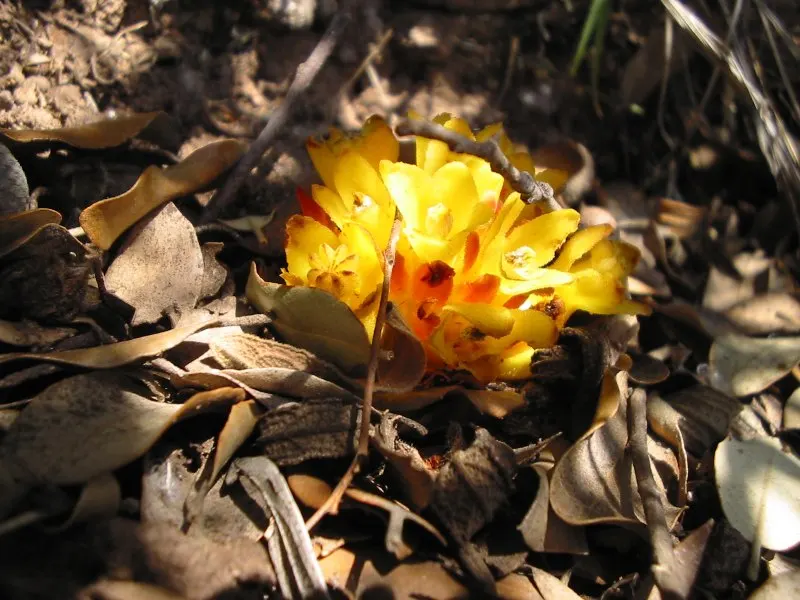
Photo: Bouba at French Wikipedia, CC BY-SA 3.0 (via Wikimedia Commons)
Hypocist
Cytinus hypocistis
Also known as Yellow Cytinus, Cistus Rape, Hypocistis
Key benefits
✦Traditional uses
✦Long before it had a place in any modern herbal, hypocist juice was one of the classical world's trusted astringents. Dioscorides described pressing the unripe fruit for its dark, tannin-rich juice, and Roman and later Arabic physicians relied on the dried cakes it produced to help calm digestive upset and check minor bleeding. Because the plant itself is so strange, rootless, leafless, and entirely dependent on the rockrose it parasitizes, herbalists of the time saw it almost as a hidden treasure, gathered quietly from beneath the scrub rather than raised in any garden. As true hypocist juice grew harder to source in later centuries, herbalists often reached for other astringent roots and leaves in its place, though its name remained attached to the astringent tradition it helped define.
How to grow & use it
✦The full apothecary for Hypocist
Traditional remedies and step-by-step preparations, a complete growing guide, and how to harvest, dry, and store it, all unlocked with HerbLens Unlimited.
- ✦Remedies & preparations
- ✦ Growing guide
- ✦Harvest & storage
From under $6 a month. Free plant identifications always included.
- ✦Agrimony
- ✦Plantain
- ✦Oak bark
- ✦Agrimony
- ✦Tormentil root
“When you want the old apothecary's astringent, the one that grew hidden beneath the rockrose and was pressed into hard little cakes.”
Its name means exactly what it does: hypo (beneath) and cistus (rockrose). Cytinus hypocistis has no leaves worth mentioning and not a trace of green in it. It cannot photosynthesize at all and survives only by tapping directly into the roots of its host shrub, drawing every bit of water and food it needs.
Cytinus hypocistis has little modern safety research behind it. Its high tannin content can cause digestive discomfort or constipation in excess, it is not recommended during pregnancy or breastfeeding, and its rarity and easy misidentification mean it should never be foraged without expert confirmation.