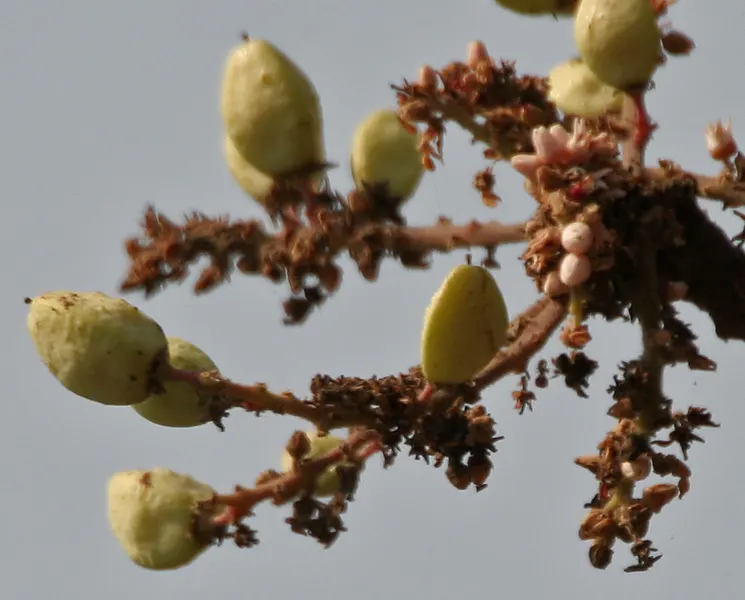
Photo: J.M.Garg, CC BY-SA 4.0 (via Wikimedia Commons)
Indian Frankincense
Boswellia serrata
Also known as Salai Guggul, Shallaki, Indian Olibanum, Salai Boswellia
Key benefits
✦Traditional uses
✦Long before it traveled the world as an incense, the resin of Boswellia serrata was gathered by hillside communities across central India and folded into Ayurvedic medicine under the name Shallaki. Healers scored the bark and returned weeks later to collect the hardened amber tears, which were chewed, simmered into decoctions, or burned as smoke for those with aching joints, labored breathing, or slow-healing wounds. It grew up alongside its cousin Boswellia sacra along the old incense trade routes, prized as much for its fragrance as for its comfort. That old, patient relationship between people and this rugged little tree is part of what still draws herbalists to it today.
How to grow & use it
✦The full apothecary for Indian Frankincense
Traditional remedies and step-by-step preparations, a complete growing guide, and how to harvest, dry, and store it, all unlocked with HerbLens Unlimited.
- ✦Remedies & preparations
- ✦ Growing guide
- ✦Harvest & storage
From under $6 a month. Free plant identifications always included.
- ✦Turmeric
- ✦Ginger
- ✦Guggul
- ✦Turmeric
- ✦Myrrh
“For the ache that settles into joints and the old, resinous wisdom of trees that grow straight out of stone.”
Boswellia serrata often takes root directly in cracks of bare limestone rock, with barely any soil to speak of, sending its roots deep into the stone to find water that other trees never could.
Boswellia resin can cause mild digestive upset or, with topical use, skin irritation in some people. It may interact with anti-inflammatory drugs or blood thinners and is generally avoided in pregnancy.