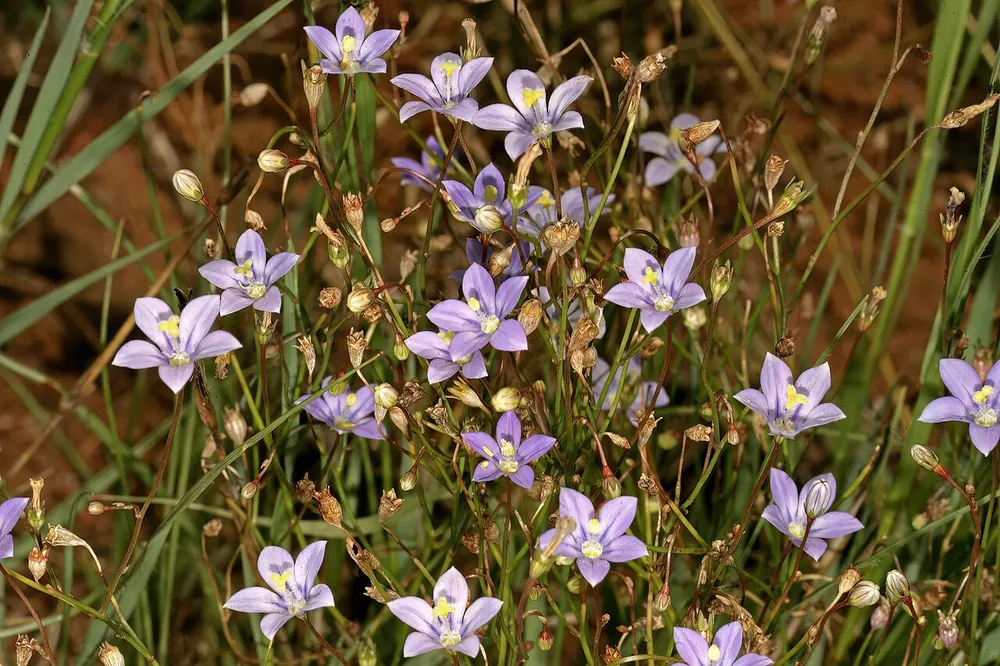
Photo: SAplants, CC BY-SA 4.0 (via Wikimedia Commons)
Rosette Bluebell
Wahlenbergia androsacea
Also known as Wild Bluebell
Traditional uses
✦Wahlenbergia androsacea does not carry a documented history in herbal medicine or the kitchen. It belongs to the great, sprawling bellflower family, whose southern African members are better known as delicate wildflowers than as remedies, and this modest annual has stayed largely in that role, growing quietly along riverbanks and damp sandy grassland from Namibia and Botswana through Zimbabwe to Mozambique and South Africa. Its story today is a botanical one rather than a medicinal one, kept alive mostly by field guides, herbarium records, and the attention of people who love finding small, honest flowers in wild, damp ground.
How to grow & use it
✦The full apothecary for Rosette Bluebell
Traditional remedies and step-by-step preparations, a complete growing guide, and how to harvest, dry, and store it, all unlocked with HerbLens Unlimited.
- ✦Remedies & preparations
- ✦ Growing guide
- ✦Harvest & storage
From under $6 a month. Free plant identifications always included.
“For the quiet reward of finding a small, honest bellflower exactly where the field guide says it should be, on a damp sandy riverbank after the rains.”
The genus Wahlenbergia honors the Swedish botanist and Alpine explorer Georg Wahlenberg, while the species name androsacea points to this plant's low rosette of leaves, which early botanists thought resembled the alpine genus Androsace, or rock-jasmine, even though the two are not close relatives.
A wildflower with no history of use as a food, tea, or medicine and no safety data, so it should not be eaten or brewed.