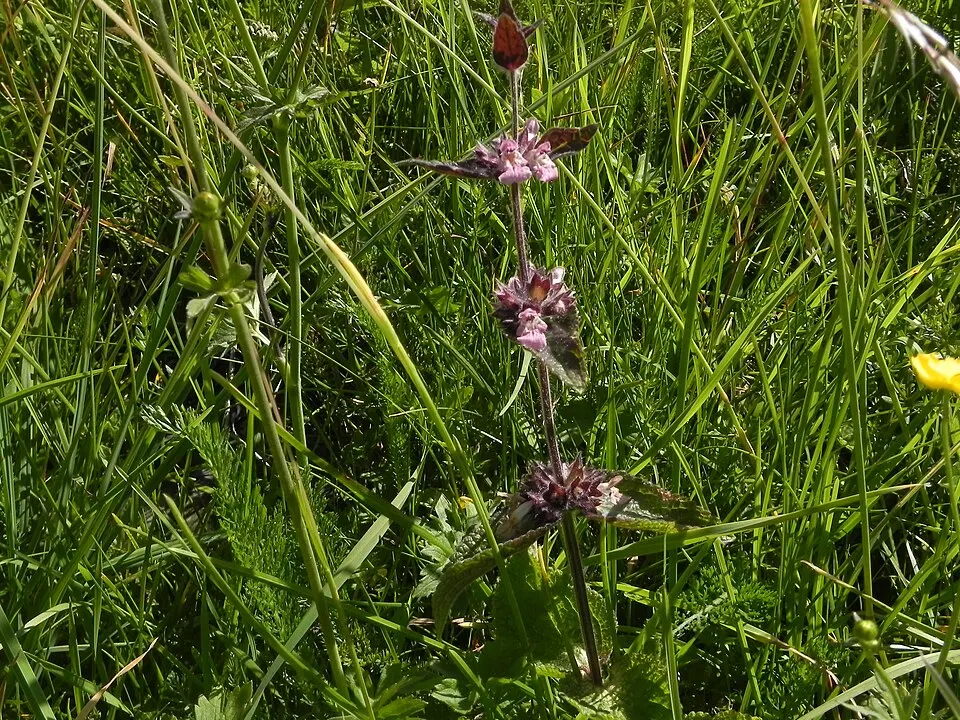
Photo: Thomas Krucker, CC BY-SA 4.0 (via Wikimedia Commons)
Alpine Woundwort
Stachys alpina
Also known as Limestone Woundwort, Mountain Woundwort
Key benefits
✦Traditional uses
✦Stachys alpina belongs to a genus whose common English name, woundwort, tells its own story. For generations, country people across Europe reached for the soft, hairy leaves of various Stachys species and pressed them onto small cuts and scrapes as a simple field dressing, much the way one might use a plantain leaf today. Stachys alpina itself is a quieter, less written about cousin of the better known betony, Stachys officinalis, tucked into shady limestone banks and old hedgerows rather than cottage gardens. Its documented history is thinner than betony's, so it is remembered today more as a rare and lovely wild plant of the hedgebank than as a working household remedy.
How to grow & use it
✦The full apothecary for Alpine Woundwort
Traditional remedies and step-by-step preparations, a complete growing guide, and how to harvest, dry, and store it, all unlocked with HerbLens Unlimited.
- ✦Remedies & preparations
- ✦ Growing guide
- ✦Harvest & storage
From under $6 a month. Free plant identifications always included.
- ✦Betony (Stachys officinalis)
- ✦Self-heal (Prunella vulgaris)
- ✦Yarrow (Achillea millefolium)
- ✦Betony (Stachys officinalis)
- ✦Self-heal (Prunella vulgaris)
“For the quiet, rare beauty of an old hedgerow, and a name that remembers when leaves were the first bandage.”
The genus name Stachys comes from the Greek word for a spike of grain, describing the plant's tall flower spikes, while the common name woundwort was earned the old fashioned way, by generations of hands that reached for these soft leaves whenever a blade slipped.
Alpine woundwort has no established record of safe internal use, and handling the hairy fresh foliage can occasionally irritate sensitive skin. It is also rare and often legally protected in parts of its range, so avoid foraging it from the wild and choose garden-grown plants instead.