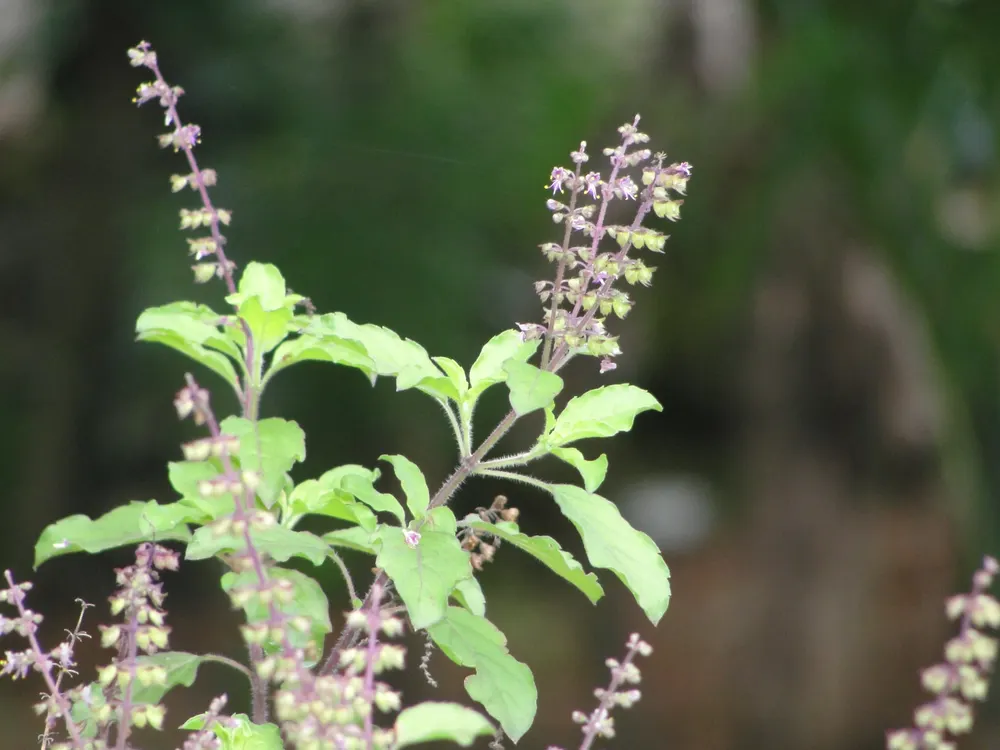
Photo: Shashidhara halady, CC BY-SA 3.0 (via Wikimedia Commons)
Holy Basil
Ocimum sanctum
Also known as Tulsi, Tulasi, Sacred Basil
Key benefits
✦Traditional uses
✦In homes across India, tulsi is not just grown, it is tended like family, planted in a special courtyard shrine and greeted with a small prayer each morning. For thousands of years, Ayurvedic tradition has called it a rasayana, a plant believed to renew vitality and help the body cope with the wear of daily life. Cooks and healers alike reached for its leaves, brewed into tea for the throat and chest during cold season, or steeped simply to settle a busy mind at the end of the day. Its Sanskrit name means the incomparable one, a reflection of how central this small, fragrant shrub became to both kitchen and temple.
How to grow & use it
✦The full apothecary for Holy Basil
Traditional remedies and step-by-step preparations, a complete growing guide, and how to harvest, dry, and store it, all unlocked with HerbLens Unlimited.
- ✦Remedies & preparations
- ✦ Growing guide
- ✦Harvest & storage
From under $6 a month. Free plant identifications always included.
- ✦Ginger
- ✦Lemon balm
- ✦Ashwagandha
- ✦Sweet basil
- ✦Lemon balm
“For the quiet after a long day, when the mind is asking to be settled.”
In Hindu tradition, tulsi is regarded as sacred, an earthly form of the goddess Vrinda, and it is often the only plant grown in its own small raised shrine, called a tulsi vrindavan, right outside the front door.
Holy basil is safe in ordinary culinary and tea amounts. Concentrated medicinal doses may slow blood clotting and affect blood sugar, so caution is warranted with blood-thinning or diabetes medication, and it's generally avoided in pregnancy at those doses.