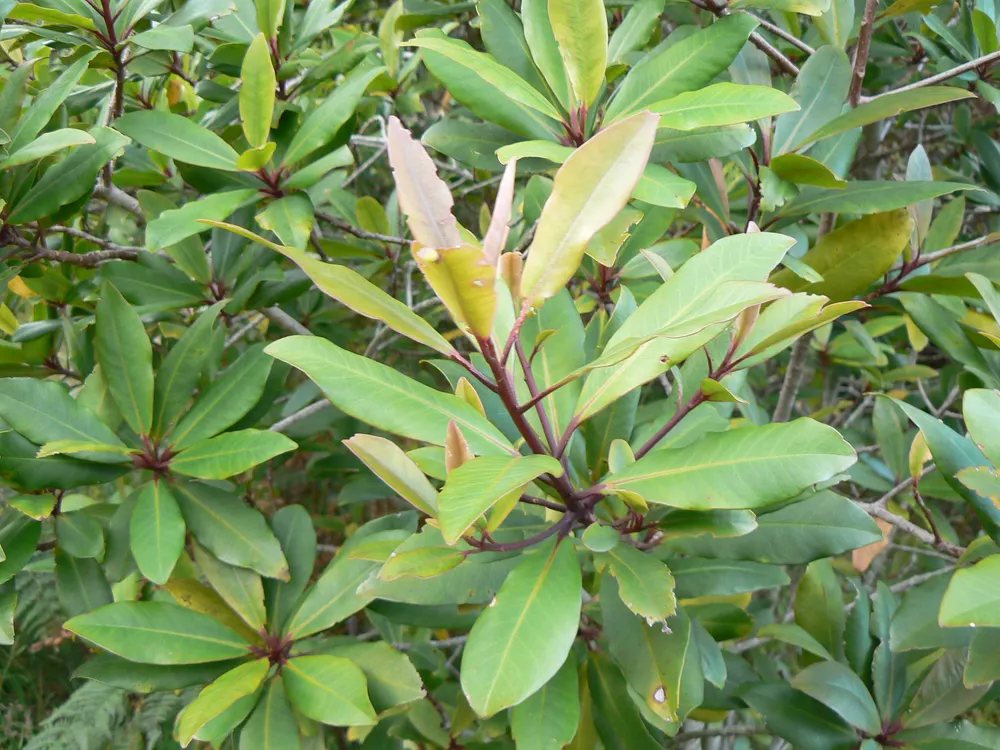
Photo: Abu Shawka, Public domain (via Wikimedia Commons)
Cape Beech
Rapanea melanophloeos
Also known as Boekenhout, Rapanea
Key benefits
✦Traditional uses
✦Long before it had a Latin name, Cape Beech was a familiar tree along the forest edges of the Southern African highlands, its dark, close-grained bark stripped in careful strips by healers who knew exactly which trees could spare it. Bark decoctions were traditionally prepared for chest complaints and coughs, and used in ritual cleansing practices where a strong emetic was called for to purge the body before healing could begin. The bark was also applied traditionally to wounds and sores, and the tough, fine timber itself was prized for yokes, furniture, and tool handles, so the tree served both the healer's basket and the woodworker's bench. Today it survives mostly in the oral memory of Zulu and Xhosa traditional medicine rather than in the modern herbal shelf.
How to grow & use it
✦The full apothecary for Cape Beech
Traditional remedies and step-by-step preparations, a complete growing guide, and how to harvest, dry, and store it, all unlocked with HerbLens Unlimited.
- ✦Remedies & preparations
- ✦ Growing guide
- ✦Harvest & storage
From under $6 a month. Free plant identifications always included.
“For the garden that wants to remember what an Afromontane forest looked like before it was cleared, and for anyone tracing the old bark medicine of Southern Africa's healers with proper guidance.”
In South African indigenous gardening circles, Cape Beech is treasured less for medicine now than for its wildlife value: its small, dark berries are a favorite of forest-dwelling fruit pigeons and louries, which eat their fill and then scatter the seeds through the canopy, quietly replanting the forest tree by tree.
Cape Beech bark has traditionally been used as a strong emetic and purgative, so it should never be self-dosed at home. Avoid during pregnancy, breastfeeding, and in children.